Where to eat in Bucharest: honest restaurant picks by neighbourhood
Bucharest: Taste tale culinary cultural walking tour through Bucharest
Where should I eat in Bucharest without getting ripped off?
Avoid restaurants in central Lipscani that have menus in eight languages and hosts at the door. Head instead to Piața Amzei, Floreasca or Văcărești. Caru' cu Bere (Strada Stavropoleos 5) is the one Old Town restaurant worth the tourist premium — book ahead for dinner.
The single most useful piece of advice for eating in Bucharest: the geographic centre of the city is not the culinary centre. Lipscani draws the tourists; locals eat in Floreasca, Dorobanți, Văcărești and around Piața Amzei. This guide maps out where to eat by neighbourhood with specific restaurant recommendations and realistic price expectations.
| Where locals eat | Floreasca, Dorobanți, Văcărești, Piața Amzei |
| Where to be selective | Lipscani (Old Town) — good options exist but are outnumbered |
| Typical main course | 45–130 RON depending on neighbourhood and style |
| Reservations needed | Noua and Dianei 4 (book 1–2 weeks ahead) |
| Best for dishes explained | Traditional Romanian dishes guide |
The Old Town (Lipscani) — navigating the tourist maze
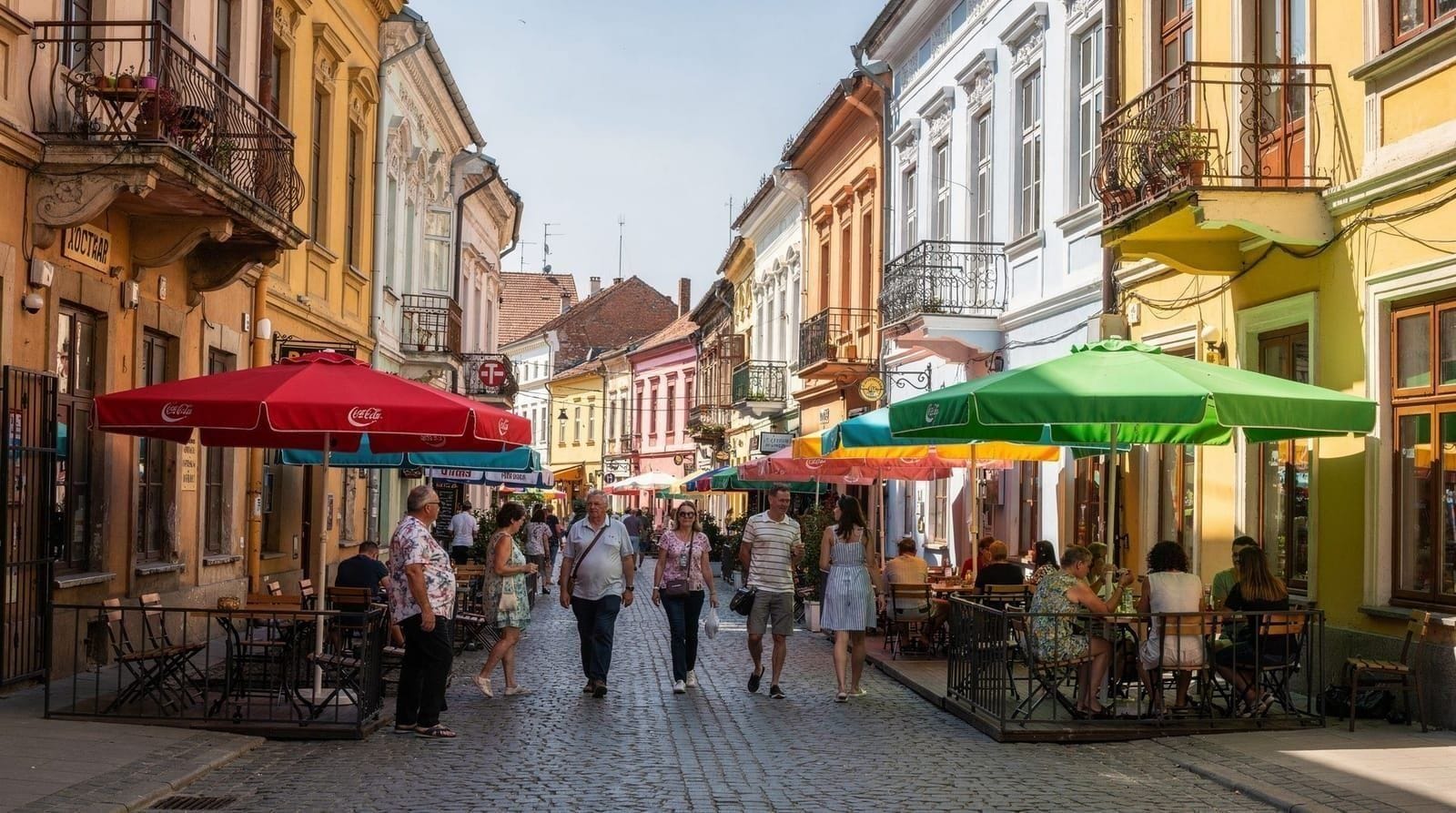
Lipscani is historically the commercial heart of Bucharest, and today it is primarily a bar and restaurant district aimed at visitors. This does not mean you should avoid eating here entirely — it means you should be selective.
Worth entering:
Caru’ cu Bere (Strada Stavropoleos 5) remains the most architecturally extraordinary dining room in Romania — a neo-Gothic 1879 beer hall with stained glass, carved wooden balconies and vaulted ceilings. The food is reliable rather than exceptional: sarmale (55 RON), ciorba de burta (38 RON), grilled pork neck (75 RON). The Sunday brunch buffet (120 RON per person) is worth considering if you want to see the interior without committing to à la carte prices. Reserve via their website for dinner.
Hanu’ lui Manuc (Strada Franceză 62) is a genuine Ottoman-era caravanserai (1808) with a central courtyard. The cooking is honest rather than ambitious — ciorba, sarmale, grilled meats — and the setting is atmospheric. Budget 70–100 RON per person including a beer.
Skip without guilt: Any restaurant on Strada Lipscani or Strada Covaci with a host standing outside and a laminated photo menu. The food-to-price ratio is uniformly poor.
If you want to see the area beyond its dining rooms, the Old Town guide walks through the streets and landmarks around these restaurants. Bills that look suspiciously inflated after a night out are covered in the Old Town bar scam and the wider tourist traps to skip list, both worth a read before you pick a table at random.
Piața Amzei area — lunch within walking distance of the centre
The neighbourhood around Piața Amzei market (15 minutes on foot from Piața Universității) is where architects, journalists and NGO workers eat lunch. The restaurants here are not exceptional but they are honest, fast and cheap.
Lacrimi și Sfinți (Strada Johann Strauss 1, Floreasca branch) — Contemporary Romanian food, one of the two or three best restaurants in Bucharest. Chef Joseph Hadad reimagines traditional dishes with French technique. Expect mains of 80–130 RON. The mushroom tocane with polenta and the duck confit with cherry jus are both excellent. Reservation essential.
Vatra (Strada Armenească 11) — A small neighbourhood restaurant, nothing flashy. The tocana de pui (chicken stew, 45 RON) and bean soup (25 RON) are the dishes to order. Popular with locals from the nearby French Embassy area. Lunch only at weekdays.
Floreasca and Dorobanți — the city’s restaurant heartland
These adjacent residential neighbourhoods in the north of the city have the highest concentration of reliable restaurants in Bucharest. The Floreasca lake area in particular has a string of terraces open in warm weather.
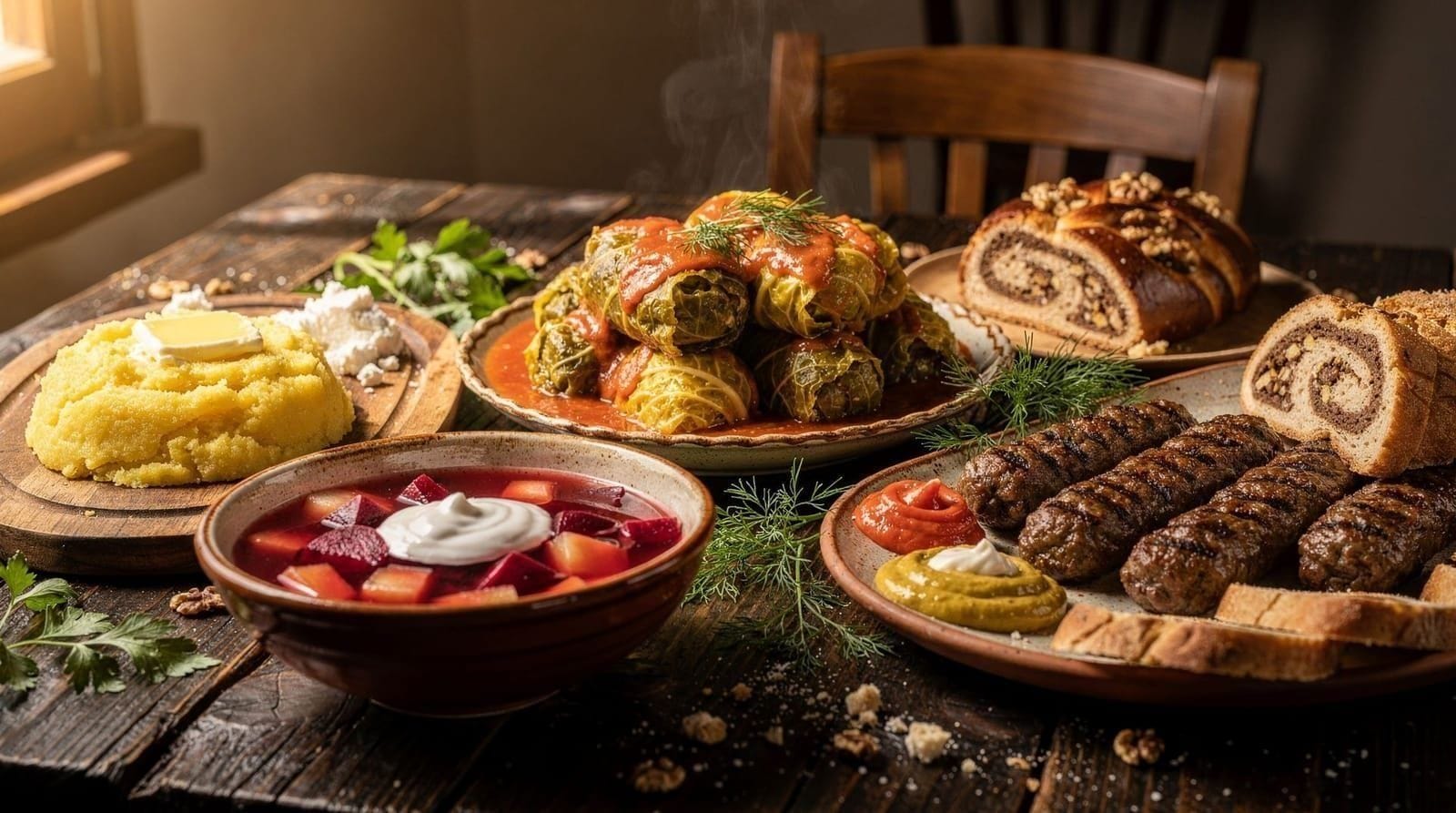
La Mama (Strada Epicii 9, Dorobanți branch) — Despite being a chain, La Mama has maintained quality for over two decades. The menu covers the Romanian canon: ciorba de burta (32 RON), mici (35 RON for 6), sarmale cu mamaliga (50 RON), cozonac (18 RON). The terrace is pleasant in summer.
Beca’s Kitchen (Strada Polonă 37) — A smaller, more personal version of La Mama, run by a family rather than a corporation. The tocaniță de vițel (veal stew) at 65 RON is one of the best versions of this dish in the city. Cash only.
Nara (Piața Charles de Gaulle) — Japanese-influenced Romanian fusion. The concept sounds questionable but the execution is genuinely good. Sushi with Romanian fish (salau/pike perch) alongside more traditional items. Budget 100–160 RON per person.
Noua (Strada Lipscani 3, misleadingly near Old Town but not of it) — Probably the most serious contemporary Romanian restaurant right now. Chef Alexandru Iacob works with a very short, frequently changing menu using hyper-local ingredients. Eight-course tasting menu at 350 RON. Reserve weeks in advance.
Văcărești and Timpuri Noi — creative food district
Roughly 2 km southeast of Piața Universității, the area around the Timpuri Noi square and the Văcărești canal has become the city’s most interesting food neighbourhood. The buildings are post-communist concrete; the restaurants inside them are not.
Dianei 4 (Strada Dianei 4) — The benchmark for contemporary Romanian cooking. The menu changes seasonally, the wine list is entirely Romanian, and the dining room feels like someone’s well-designed apartment. Mains 90–140 RON. Reserve well in advance.
Bistro Ceva Bun (Strada Văcărești 52) — Unpretentious local bistro with very good ciorba, fresh bread baked on-site, and a changing blackboard menu. Lunch runs 40–60 RON per person including a glass of wine.
Lahovari (Piața Lahovari 1) — Natural wine bar with small plates. Romanian biodynamic wines at 35–60 RON per glass, alongside boards of local cheese and charcuterie. More for drinking than eating, but the food is taken seriously.
The Obor area — eating like it’s 1985
Piața Obor is the city’s largest traditional market, and the restaurants surrounding it are completely free of tourist polish. This is where construction workers, market sellers and pensioners eat. That means excellent value and zero compromise.
Berăria Obor (Strada Ziduri Moșilor) — A beer hall that has not changed since the 1980s, and in a good way. Draft Ursus and Ciuc at 10–12 RON per half-litre, grilled mici (8 RON each), sarmale (40 RON). The interior is fluorescent-lit formica; the food is honest.
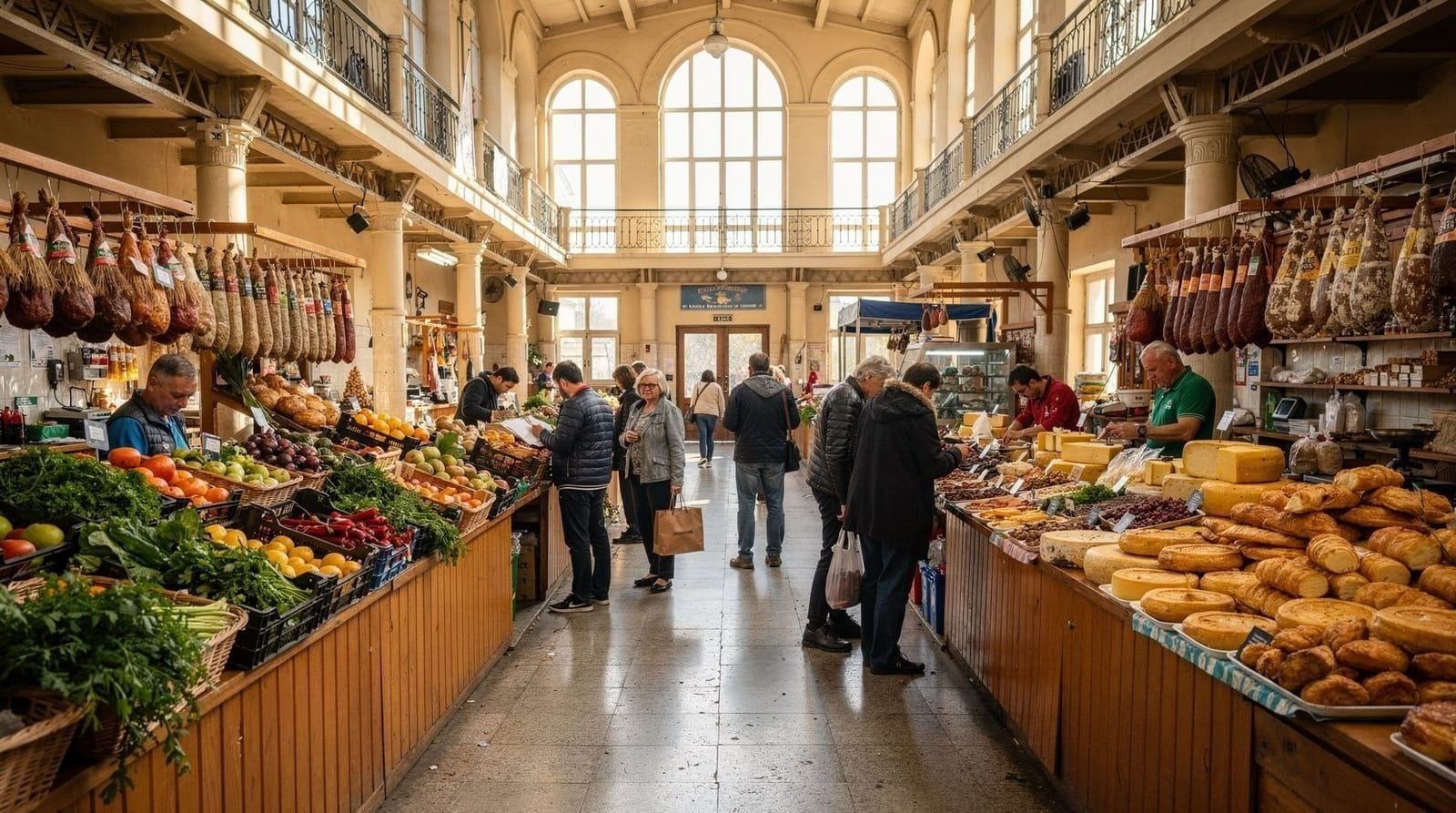
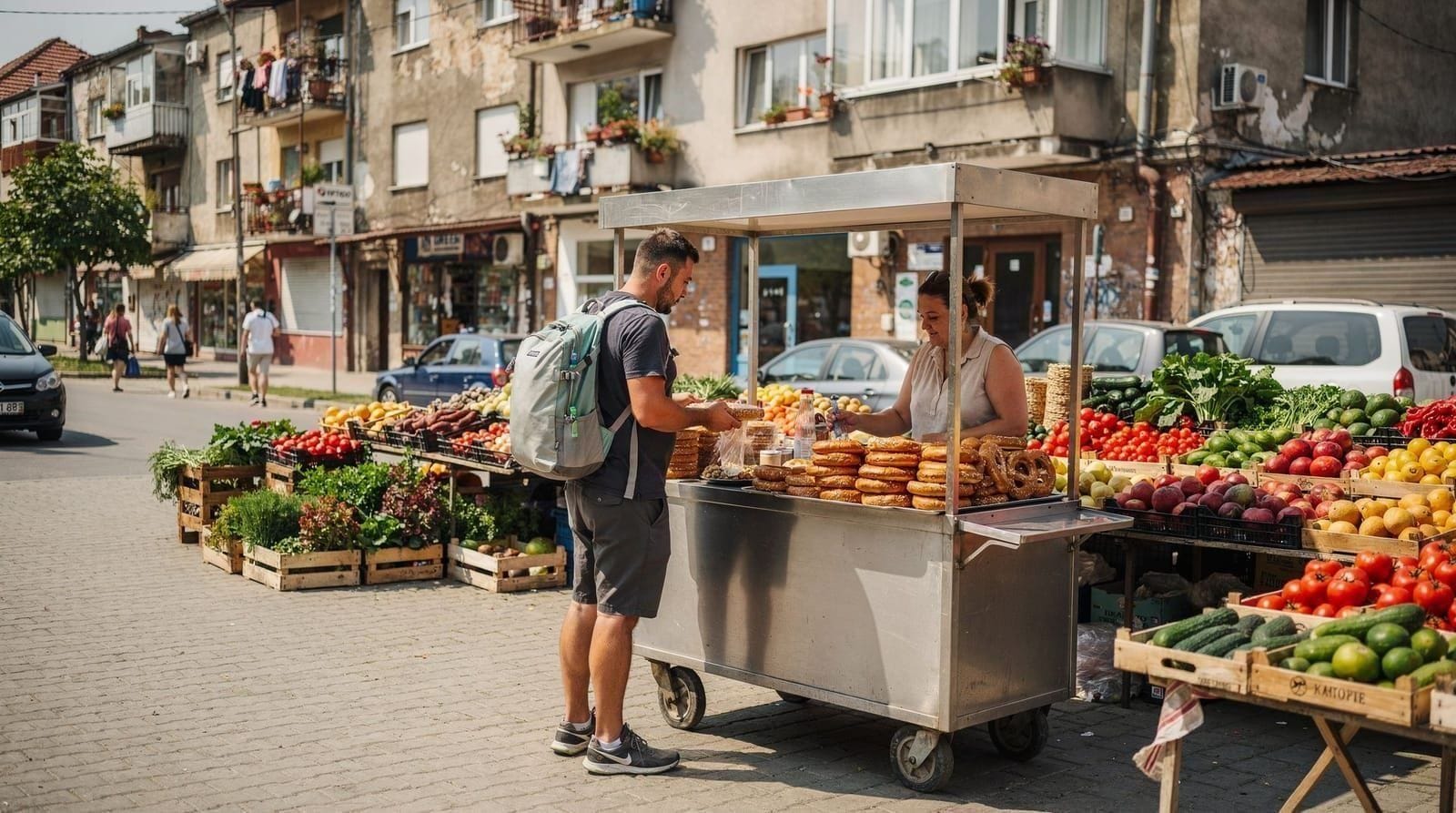
Chiosc de la Obor (inside Piața Obor) — Not a restaurant but worth mentioning: the market has a small food section selling covrigi, sheep’s cheese, smoked meats and seasonal pickles at genuine market prices. A complete breakfast (covrigi, brânza, olives) costs 25–35 RON.
Herastrău Park area — lunch with a view
The park and surrounding area is worth eating in if you are visiting the Village Museum or Herăstrău Park.
Acuarela (in the park, on the lakefront) — Terrace restaurant with views of the lake. Food is adequate rather than excellent — grilled fish, salads, pizza — but the setting in summer is very pleasant. Budget 80–120 RON per person.
Shift Pub (Strada Ing. Zablovschi, near the park) — Craft beer bar with better-than-average food. Good for an afternoon beer and sandwich after museum visiting. Budget 50–70 RON.
Eating well does not have to mean spending a lot. The market-side spots above pair naturally with the advice in Bucharest on a budget, and the daily budget breakdown helps you decide how many fine-dining evenings your trip can absorb alongside cheaper lunches.
Neighbourhood comparison at a glance
| Neighbourhood | Best for | Price level | Reservation needed |
|---|---|---|---|
| Lipscani (Old Town) | Atmosphere, walkability | Mid–high (tourist premium) | Sometimes (Caru’ cu Bere) |
| Piața Amzei | Quick honest lunch | Low–mid | Rarely |
| Floreasca/Dorobanți | Best overall food scene | Mid–high | Yes, top spots |
| Văcărești/Timpuri Noi | Contemporary Romanian cooking | Mid–high | Yes, top spots |
| Obor | Cheapest, most local | Low | No |
| Herăstrău | Lunch with a view | Mid | No |
Dietary requirements: vegetarian, vegan and gluten-free
Romanian cuisine is meat-heavy by default, but the Orthodox fasting tradition (mancare de post) means genuinely good vegetarian and often vegan dishes are on nearly every traditional menu — look for the “de post” label or a small leaf icon. Ciulama de ciuperci (mushrooms in white sauce, though check if the sauce uses dairy), fasole batuta (mashed beans), salata de vinete (aubergine salad) and mamaliga are safe starting points; see the traditional Romanian dishes guide for a fuller list.
Gluten-free options are more limited at traditional restaurants — sarmale and mici both typically contain rice or breadcrumbs as binders, so ask directly (“fara gluten”) rather than assuming. Floreasca and Dorobanți have several newer restaurants with explicit gluten-free menu sections; traditional Old Town spots are less consistent about labelling.
Food tours worth booking
A guided culinary tour is genuinely the fastest way to get a calibrated view of Bucharest’s food scene, particularly if your time is limited.
The Taste & Tale culinary walking tour covers Old Town producers, a traditional market, and several tastings including ciorba, mici and local pastries. About 3–4 hours, suitable for first-time visitors.
The local food and history tour combines neighbourhood context with food stops — useful if you want to understand why Bucharest eats what it eats, not just what it eats.
Fitting meals around sightseeing
Plan your meals around what you are seeing that day rather than the other way round. After the Palace of Parliament the options nearby are thin, so decide beforehand where you will have lunch. Along Calea Victoriei you will find plenty of places to stop between sights, though the same selectivity applies as in Lipscani. For an evening out that continues after dinner, the nightlife guide and the rooftop bars list suggest where to go next. If you are building a full trip, the Bucharest in 3 days itinerary leaves room for meals at several of the neighbourhoods above.
Practical restaurant tips for Bucharest
Reservations: Required at Noua and Dianei 4 (book at least a week ahead). La Mama and Caru’ cu Bere can be reserved same-day online. Most Floreasca restaurants are walk-in only.
Hours: Lunch typically 12:00–15:00; dinner 19:00–23:00. Many restaurants close between services. Sunday hours are reduced across the city.
Language: English menus are standard in tourist areas and in most Floreasca restaurants. Outside these areas, translation apps work well — Romanian food vocabulary is phonetically manageable.
Payments: Cards accepted almost universally. Some small neighbourhood spots and market vendors are cash only; keep 100–200 RON in small bills.
For context on what you are eating, the Bucharest food guide explains the dishes. For wine specifically, see the Romanian wine guide. For the city more broadly, the first-time Bucharest guide covers neighbourhood logistics and transport. If you’re still deciding where to base yourself, where to stay in Bucharest covers which neighbourhoods put you closest to the best food.
Frequently asked questions about eating in Bucharest
Is tipping expected in Bucharest restaurants?
A 10% tip is appreciated and appropriate at restaurants with table service. Some tourist-facing restaurants in Lipscani add service charges automatically — check your bill before adding more. In cafes and casual spots, tipping is not expected.
Can I drink tap water in Bucharest restaurants?
Technically yes, but most locals avoid it due to taste (heavily chlorinated). Bottled water is universally available at 5–10 RON per 0.5 litre. Asking for “apă plată” gets you still water, “apă minerală” gets sparkling.
What time do Bucharest restaurants open for dinner?
Most restaurants start dinner service at 19:00–19:30. Arriving at 18:30 is unusual and some kitchens are not fully ready. Peak hours are 20:00–22:00.
Are there good brunch options in Bucharest?
Yes, particularly in the Floreasca and Dorobanți areas. Weekend brunch culture has developed significantly since 2018. Cafes around Piața Floreasca and along Strada Dorobanților offer brunch menus with coffee, eggs, pastries and fresh juice for 50–80 RON per person.
What is the best restaurant for a special occasion dinner in Bucharest?
For a celebratory meal, Noua (Strada Lipscani 3) or Dianei 4 (Strada Dianei 4) are the top choices. Both offer seasonal Romanian fine dining in intimate settings. Budget 250–400 RON per person with wine. Reserve 1–2 weeks ahead. For a more classic atmosphere, Caru’ cu Bere (Strada Stavropoleos 5) has the most dramatic interior in the city — appropriate for a dinner with genuine historical setting.
Are there good Romanian restaurants near the Palace of Parliament?
The immediate area around the Palace of Parliament (Piața Constituției) is largely dominated by government buildings and lacks good restaurants. Berăria H at Piața Constituției 1 is the exception — a large craft beer hall with live music and decent grilled food. For better options, take a Bolt (10–15 RON) to the Văcărești or Floreasca areas.
What is the cheapest filling meal in Bucharest?
Mici from a street grill: 4–5 pieces with bread and mustard for 30–50 RON. Alternatively, the prânz (lunch) menus at local restaurants offer soup plus a main course for 35–50 RON. Covrigi (pretzels) from street vendors at 2–4 RON each make an excellent snack. The Piața Obor market area has the widest range of budget options including market stall food.
Which food delivery apps work in Bucharest?
Glovo and Tazz (the local food delivery platform owned by eMAG) are the main options. Both have wide restaurant coverage in Bucharest. Delivery costs 8–15 RON. If your accommodation has a kitchen, this is a useful option for trying a wider range of local restaurants than a time-constrained itinerary allows.
Where should I eat if I’m staying near the Village Museum or Herăstrău Park?
Acuarela and Shift Pub, both covered above, are the practical picks directly in the Herăstrău Park area. For a wider selection, Floreasca and Aviatorilor are a short Bolt or walk away and have considerably more choice.
Are there good options for a quick meal near the Palace of Parliament or Old Town sights?
Berăria H at Piața Constituției is the main sit-down option near the Palace of Parliament itself. In Old Town, Vatra and Caru’ cu Bere both work for a sit-down meal between sights; for something faster, the placinte and covrigi vendors around Lipscani are reliable for a quick, cheap bite.
Top experiences
Bookable activities with verified prices and instant confirmation on GetYourGuide.