Old Town Bucharest guide: what to see, what to skip, how to stay safe
The secret Bucharest half-day walking tour
Is Bucharest's Old Town worth visiting?
Yes for architecture, daytime walks and a few specific bars and restaurants. The area has genuine historic character — 18th and 19th century merchant streets, Byzantine churches and Art Nouveau facades. However, the restaurant scene is largely tourist-facing, and the Old Town bar scam is a real risk at night. Visit in the afternoon, explore the architecture, have a coffee at Caru' cu Bere, and move to better restaurants elsewhere for dinner.
Bucharest’s Old Town — roughly centred on Strada Lipscani and extending between Calea Victoriei to the west and Boulevard Brătianu to the east — is both the most visited area of the city and the most misunderstood. It is not a preserved medieval quarter in the style of Prague’s Staré Město or Warsaw’s reconstructed Stare Miasto. It is something more complicated: a patchwork of 18th-century merchant streets, communist-era interventions, pre-war Art Deco and Belle Époque facades, and recent post-1990 construction, all crammed into a few blocks. The historical fragments are genuine and interesting; the bar and restaurant scene is largely a tourist machine. Here is how to navigate it.
| Where | Lipscani core, between Calea Victoriei and Bd. Brătianu |
| Time needed | 90 min for the core streets, half a day with museums |
| Cost | Free to walk; Curtea Veche around 10 RON; guided walks around 120–150 RON |
| Getting there | Metro to Piața Universității or Piața Unirii (M1/M2/M3) |
| Best time | Wednesday–Friday afternoon; avoid alone-with-a-stranger bar invitations at night |
The geography of the Old Town
The Old Town occupies approximately 1.5 square kilometres between:
- West: Calea Victoriei (the main north-south boulevard)
- East: Boulevard Brătianu / Boulevard Unirii
- North: Piața Universității
- South: Boulevard Unirii / Dâmbovița River
The core historic zone — Lipscani, Franceză, Gabroveni and Stavropoleos streets — is compact enough to walk completely in 90 minutes. The surrounding area (the University Square, Cișmigiu Park area, the boulevard south toward the Palace of Parliament) extends the walk significantly and is worth including.
Architecture and history: what you are looking at
The merchant streets
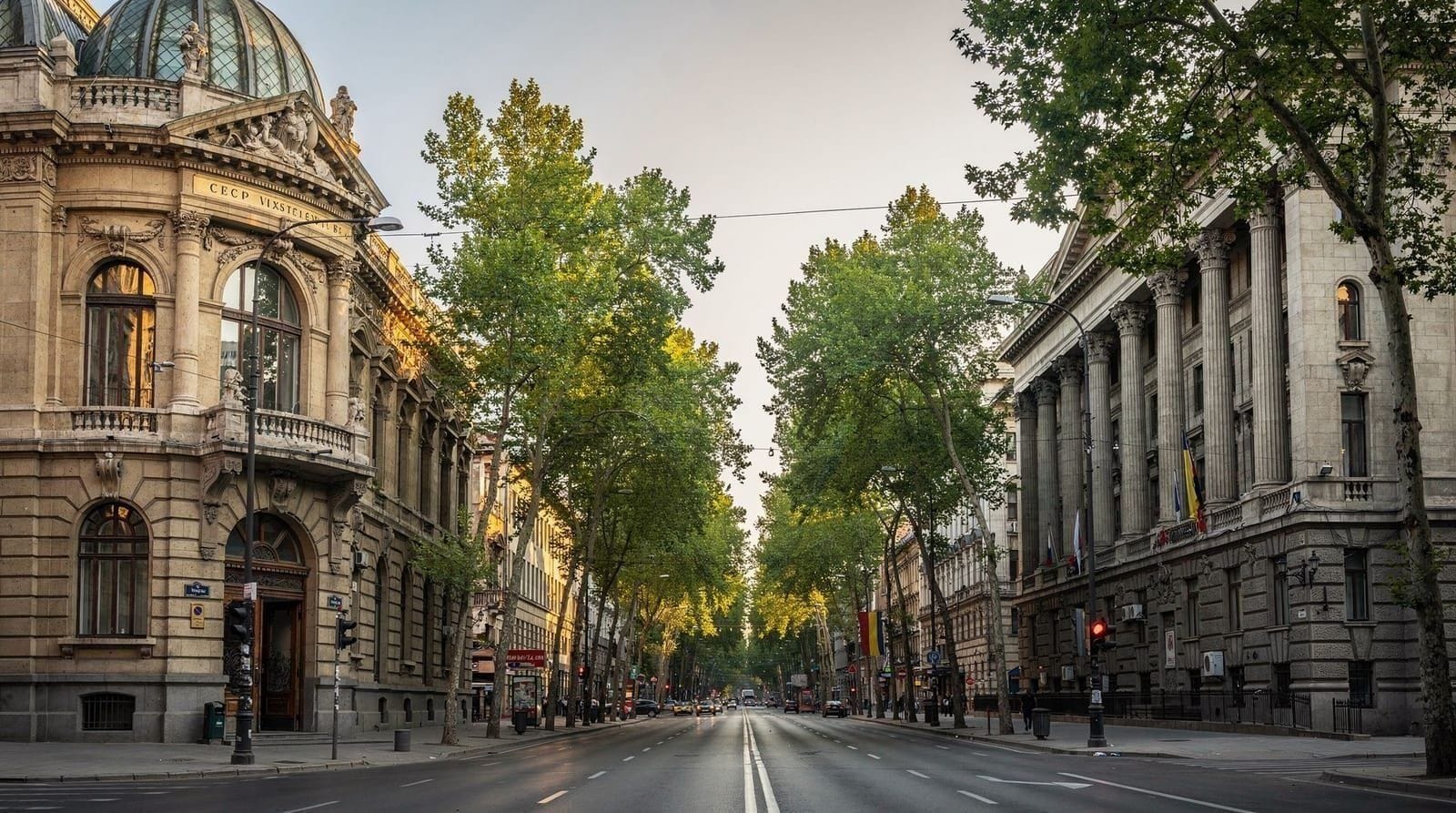
Strada Lipscani takes its name from Leipzig (Lipsca in Romanian) — this was where merchants selling goods from Leipzig’s famous trade fairs operated from the 17th century onwards. The surviving buildings are mostly 19th-century, with ground-floor commercial spaces and upper-floor merchant residences. The mix of Neo-Baroque, Ottoman-influenced and early 20th-century facades tells the story of Bucharest’s rapid Westernisation under Carol I.
Strada Franceză (French Street) has some of the best-preserved 19th-century facades in the Old Town. Numbers 58–68 include a continuous row of buildings with French-influenced decorative elements — the result of late 19th-century urban planning that deliberately modelled Bucharest’s new commercial centre on Paris. The name “Little Paris” comes partly from this deliberate architectural mimicry.
Strada Gabroveni was the guild street for Bucharest’s Bulgarian merchant community (Gabrovo in Bulgaria was a major textile centre). Several small-scale 18th-century structures survive, though most have been altered.
Stavropoleos Church (1724)
On Strada Stavropoleos, this is the most important pre-modern building in the Old Town. Built in the Wallachian Brâncovenesc style (a fusion of Byzantine, Ottoman and Central European Baroque elements), the church has an elaborately carved stone porch and interior frescoes still intact. The small courtyard contains fragments of carved stone rescued from demolished Bucharest churches. Open to visitors outside service times; free entry; respectful dress required.
The church was built by a Greek innkeeper from Stavropol (Stavropoleos means “city of the cross” in Greek). It survived the Ottoman period, the Russian occupations, the 1940 earthquake and communist demolitions, and remains one of Bucharest’s most complete historic structures.
Curtea Veche — the Old Princely Court
At Strada Franceză 25, the ruins of the 15th–16th century Wallachian princely court are now an archaeological park. Vlad Țepeș (Vlad the Impaler) held court here in the 1460s; later rulers expanded the complex before it was largely demolished in the 18th century. What remains are the foundations, some walls, and fragments of the Byzantine chapel. Admission approximately 10 RON; small but genuinely historic site.
The attached Hanul lui Manuc (Manuc’s Inn, 1808) at Strada Franceză 62 is the oldest functioning inn in Bucharest, with an Ottoman-style inner courtyard. The restaurant serving the courtyard is a tourist operation, but the architecture is worth the walk-through.
Caru’ cu Bere (1879)
The neo-Gothic beer hall at Strada Stavropoleos 5 is the single most impressive interior in the Old Town. The main hall has 12-metre vaulted ceilings, stained glass skylights, carved mahogany balconies and a central bar that has been in continuous operation since 1879. The food is tourist-oriented and moderately priced; the interior alone justifies the visit. Have a beer or a coffee at the bar rather than a full meal if budget is a concern.
Where to eat well near the Old Town
Most restaurants directly on Lipscani are priced for tourists and mediocre for it — set menus, laminated photos, staff pulling passers-by off the street. That does not mean you should skip food in the area entirely; it means walking a block or two off the main drag. For a proper introduction to Romanian dishes rather than the tourist-menu version, see the Bucharest food guide, and for the honest picture of where locals actually eat versus where the crowds go, where to eat in Bucharest covers the wider city. Caru’ cu Bere remains worth a beer or coffee for the room alone, even if you eat dinner elsewhere.
Old Town by day vs by night
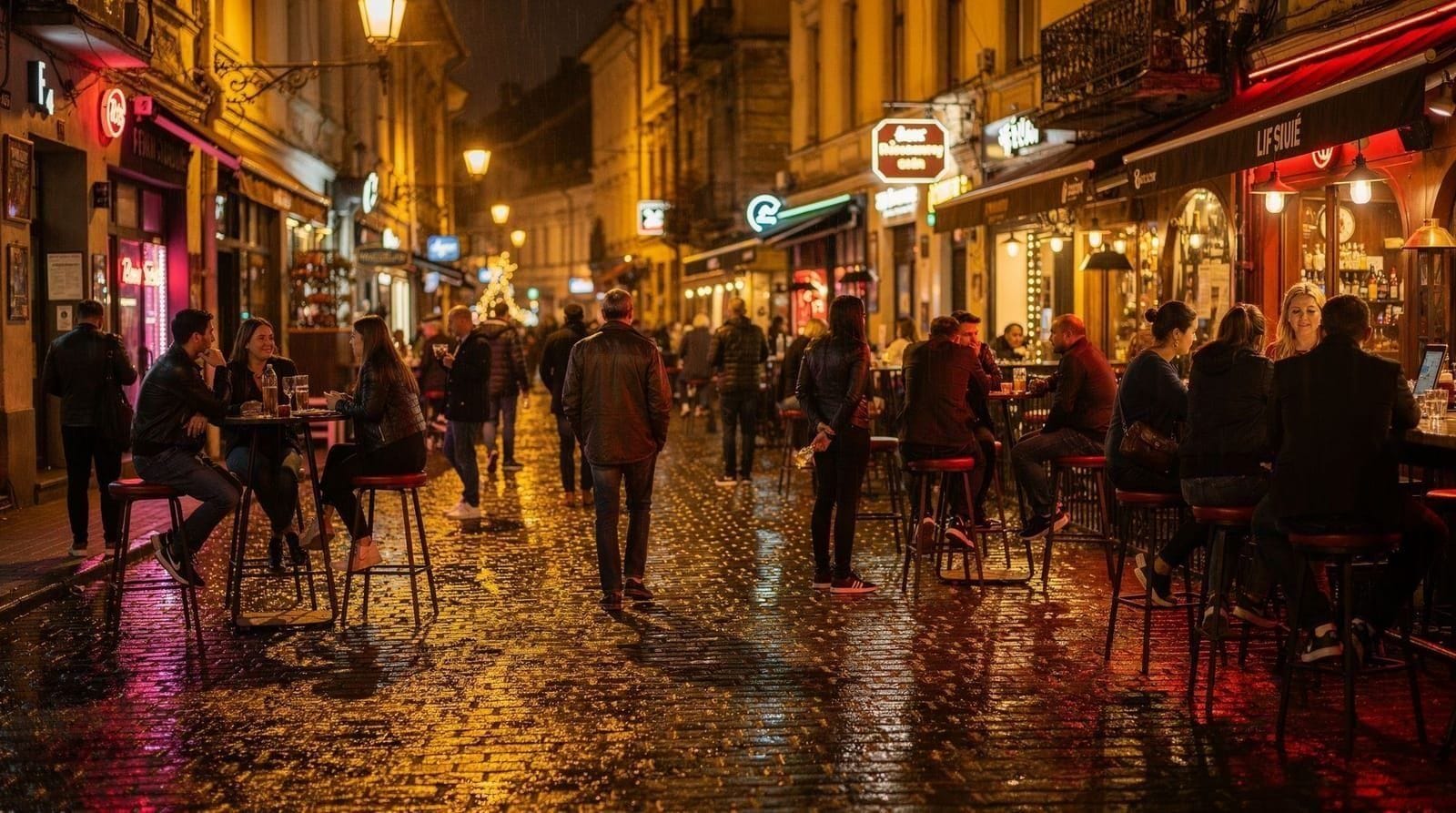
| Daytime (10:00–18:00) | Night (after 20:00) | |
|---|---|---|
| Atmosphere | Calm, good for photography and architecture | Loud, crowded, bar-crawl energy on weekends |
| Main risk | Minimal — pickpockets in dense pedestrian pockets | Bar scam, aggressive touts, overpriced clubs |
| Best for | Churches, Curtea Veche, walking tours, coffee | Caru’ cu Bere for a beer, then move on elsewhere |
| Our advice | Do the sightseeing here | Have one drink here, dinner and the rest of the night elsewhere |
Piața Universității — where the revolution happened
The University Square (Piața Universității) at the northern edge of the Old Town is historically significant as the site of the December 1989 revolution. The Inter-Continental Hotel (visible from the square) had its rooftop occupied by television cameras broadcasting the moment Ceaușescu’s helicopter escaped the Palace of the Central Committee. The square was the location of major protests in the days following December 21st.
A memorial cross and the “Kilometer Zero of Romanian Democracy” plaque mark the spot. The National History Museum (directly on the square) is worth 2–3 hours for context on Romanian history; admission 35 RON. See the 1989 revolution sites guide for more detail.
The CEC Palace and Calea Victoriei
The CEC Palace (Savings Bank Palace, 1900) at Calea Victoriei 13 is one of Bucharest’s best Belle Époque buildings — a dome with ornate stonework that would not be out of place in Vienna or Budapest. Worth viewing from outside; the interior is not generally open to tourists.
Calea Victoriei north of the Old Town is Bucharest’s most important historic boulevard, covered in detail in the Calea Victoriei guide.
Walking tours: why they genuinely add value
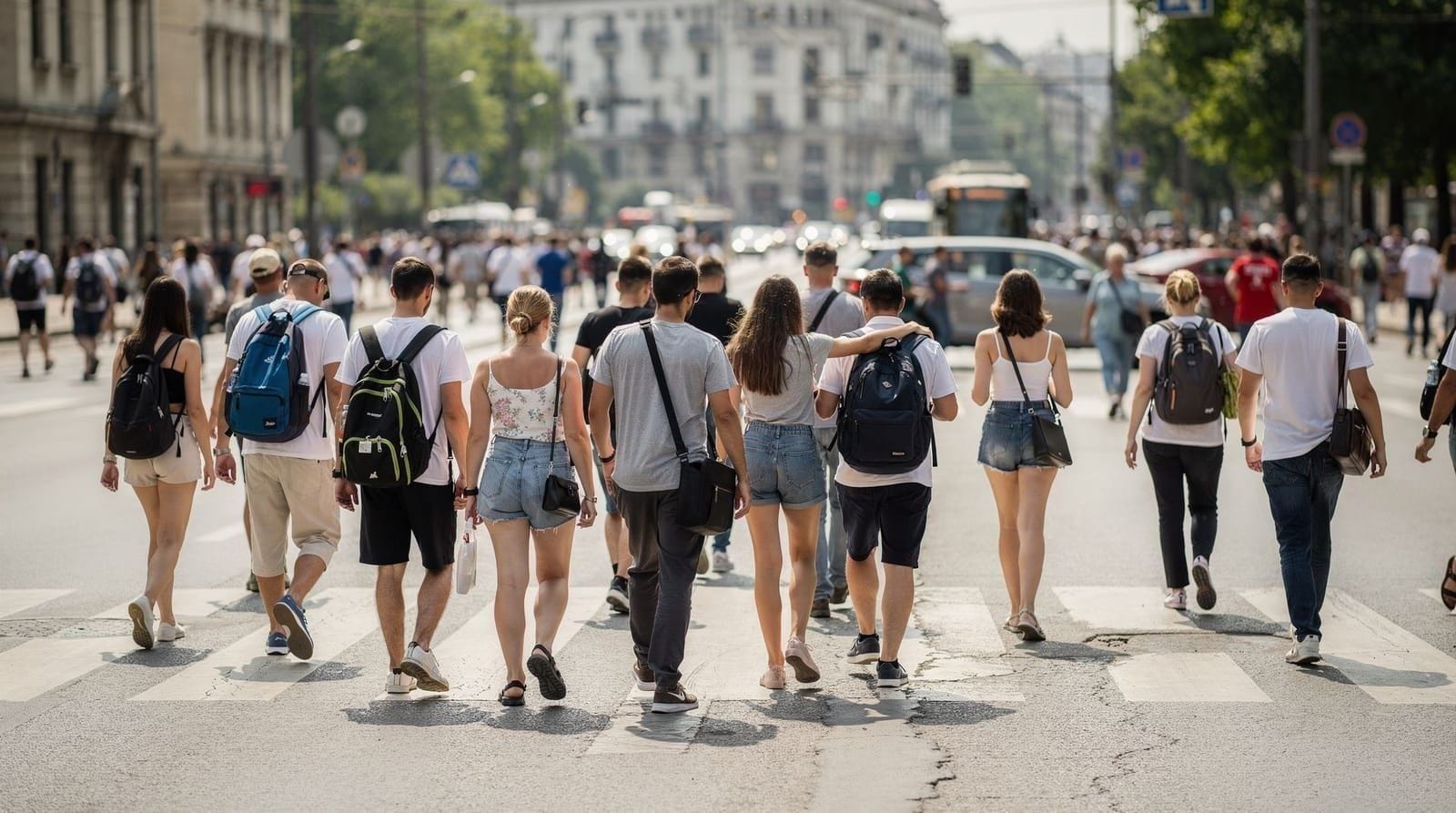
The Old Town’s history is not self-evident from the streets. Without context, a walk through Lipscani looks like a mix of decent old buildings and modern bars. A guided walk explains which buildings survive from which century, what was demolished when and why, and what the streets looked like before 1977 (the year Ceaușescu’s urban renewal programme began systematically removing pre-modern Bucharest).
Bucharest: A tale of Old Town walking tour — 2 hours, covers the main historic streets with a local guide. Good historical depth without feeling like a lecture. About 120–150 RON per person.
Old Town and Calea Victoriei small group walking tour — Maximum 12 people. Extends the walk to include the Calea Victoriei boulevard, giving more complete coverage of the historic centre. 2.5 hours.
Hidden gems walking tour — Focuses on the less obvious parts of the Old Town: interior courtyards, lesser-known churches, and the passageways (pasaje) connecting streets. Good for return visitors who have already done the main monuments.
Lipscani takes its name from the merchants who traded with Leipzig, and the covered passages off it — Villacrosse chief among them — are easy to walk past without noticing: an Old Town hidden gems, legends and laneways walk goes through the ones with doors rather than signage.
The Old Town bar scam: what it is and how to avoid it
This is important enough to state clearly. The scam operates as follows:
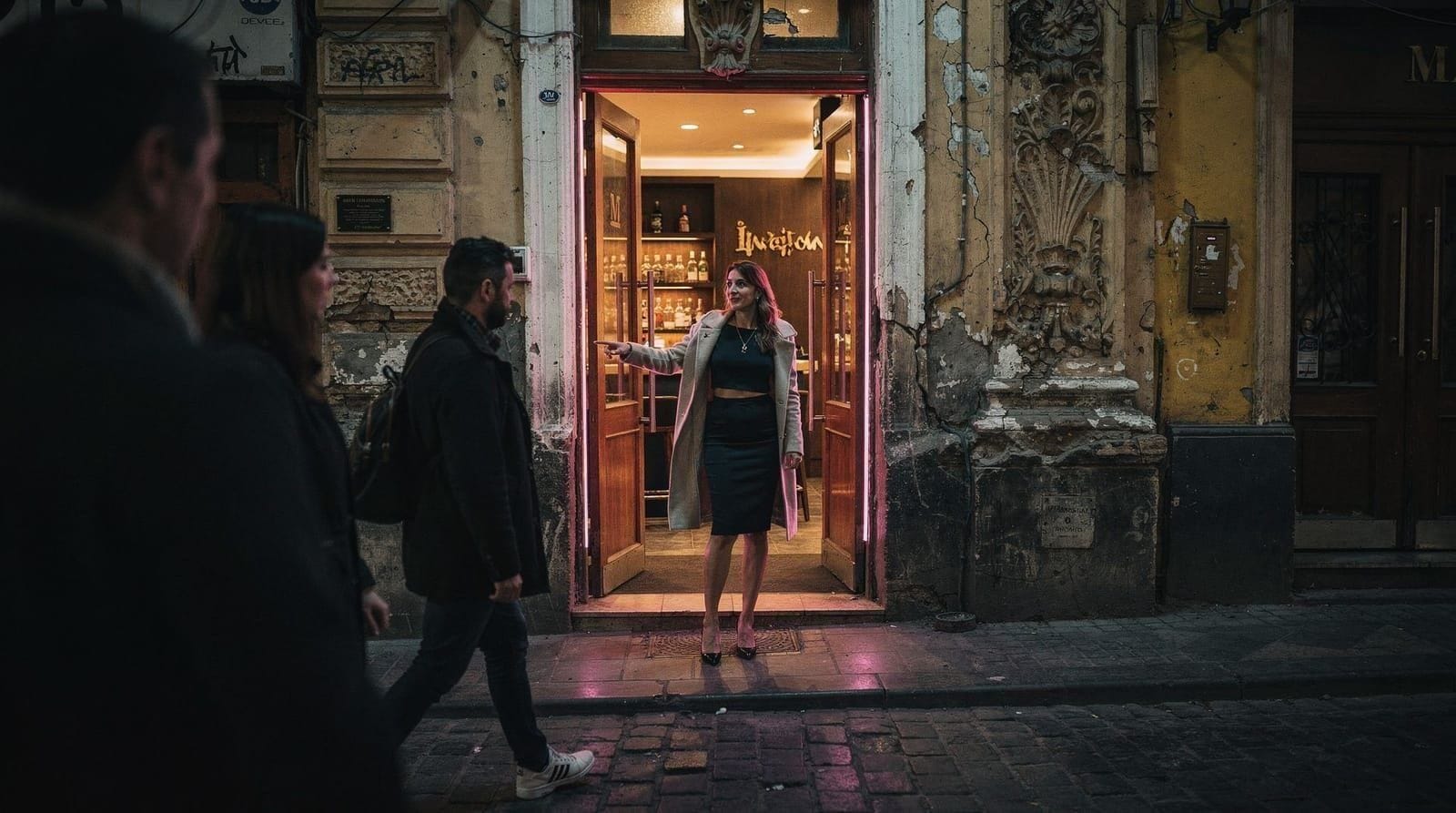
A well-dressed stranger (often female, often apparently local) approaches near Piața Universității, Calea Victoriei or the perimeter of the Old Town and initiates conversation. After a few minutes they suggest going to a particular bar they “know” or “go to all the time.” The bar looks entirely normal. When you receive the bill, items are priced at 200–800 RON each. The menus are technically accurate — the bar did list these prices — but they are designed to be missed. When you refuse to pay, you are confronted by staff who may be physically intimidating.
How to avoid it: Never let a stranger you just met direct you to a specific bar. Choose your own venues from this guide or from your accommodation’s recommendations. If you feel you are in this situation, tell the staff you want to call the police (their number is 112) and ask to see the manager. The police tourist helpline is 0800 800 955.
The Old Town bar scam guide has more detail on recognising the setup and what to do if caught.
Combining the Old Town with the rest of the city
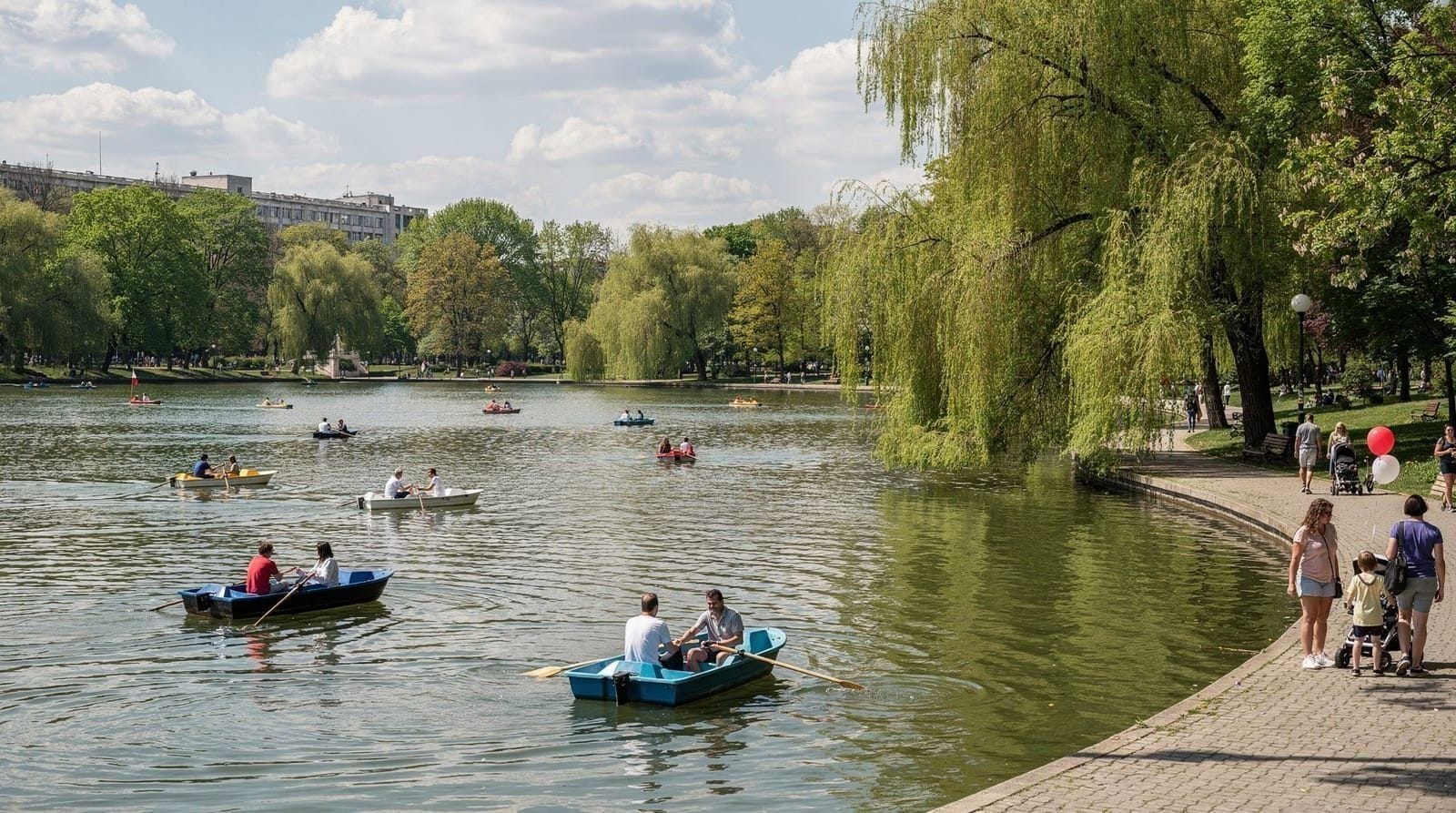
The Old Town works best as a half-day slice of a longer stay rather than the whole visit. Herăstrău Park, on the opposite side of the city, gives a green counterpoint after a few hours on cobblestones — see the Herastrau Park guide. If you are deciding how much time Bucharest deserves overall, how many days in Bucharest and the first-time Bucharest guide both use the Old Town as the anchor for day one. Travellers building a full communist-history day can pair the University Square sites here with the deeper communist Bucharest tour and museum of communism elsewhere in the centre.
Practical logistics for visiting the Old Town
Getting there: Metro to Piața Universității (Line M1/M3) or to Piața Unirii (Line M1/M3/M2). Both are a 5–10 minute walk from the main Old Town streets. Tram 1 and 10 run along Calea Victoriei.
Parking: Paid parking is available in several car parks around the perimeter. Do not attempt to drive through the pedestrianised Old Town core (Lipscani and adjacent streets).
Best time to visit: Wednesday–Friday afternoons are the best balance of activity (open restaurants and museums) without weekend crowd congestion. Sunday mornings are very quiet with many establishments closed. Saturday evening is the most energetic but also the most congested.
Hours: The Old Town has no opening hours in itself, but specific sites (Curtea Veche, museums, churches) typically open 10:00–18:00 with closure on Monday.
Cost: Walking the streets is free. Curtea Veche admission approximately 10 RON. Church entry is free (donations appreciated). Caru’ cu Bere — expect 60–90 RON for a beer and a light meal.
Frequently asked questions about Old Town Bucharest
How does Bucharest’s Old Town compare to other Eastern European old towns?
It is significantly smaller and less pristine than Prague’s Staré Město or Krakow’s Stare Miasto. The historic fabric has been more disrupted by 20th-century events (earthquake damage, communist demolitions). However, what survives — Stavropoleos Church, the Curtea Veche, the 19th-century merchant facades — is authentic and not reconstructed. It feels less like a theme park than more famous old towns.
Can I visit the Old Town for free?
Almost entirely yes. The streets, churches (outside service times), and general architectural viewing are free. The Curtea Veche ruins cost approximately 10 RON. Organised walking tours are the main discretionary cost.
Is there a free walking tour of Bucharest’s Old Town?
Yes. Free Bucharest Tours operates a tip-based walking tour from Piața Universității at set daily times (typically 10:00 and 14:00). These cover the main Old Town sites and Communist-era highlights in 2.5–3 hours. The guides work for tips — 50–100 RON per person is appropriate.
What language is the Old Town easiest to navigate in?
English is universally understood in the Old Town — this is the most tourist-facing area of the city. Romanian is not necessary for a visit here, though basic phrases are appreciated.
Is it worth visiting the Old Town in winter?
Yes, especially December. The Old Town hosts Christmas market stalls, lights are installed along the main streets, and Caru’ cu Bere is particularly atmospheric in cold weather. Crowds are smaller than summer. See the Bucharest at Christmas guide for seasonal specifics.
How much time should I actually budget for the Old Town?
Ninety minutes covers the core streets at a walking pace. Add another hour if you go inside Curtea Veche and Stavropoleos Church, and a further two to three hours if you take a guided walking tour and stop for coffee. Most visitors are satisfied with a half-day; trying to stretch it into a full day usually means backtracking over the same few blocks. Read the Bucharest itinerary guide for where the Old Town fits against everything else in the city.
Top experiences
Bookable activities with verified prices and instant confirmation on GetYourGuide.