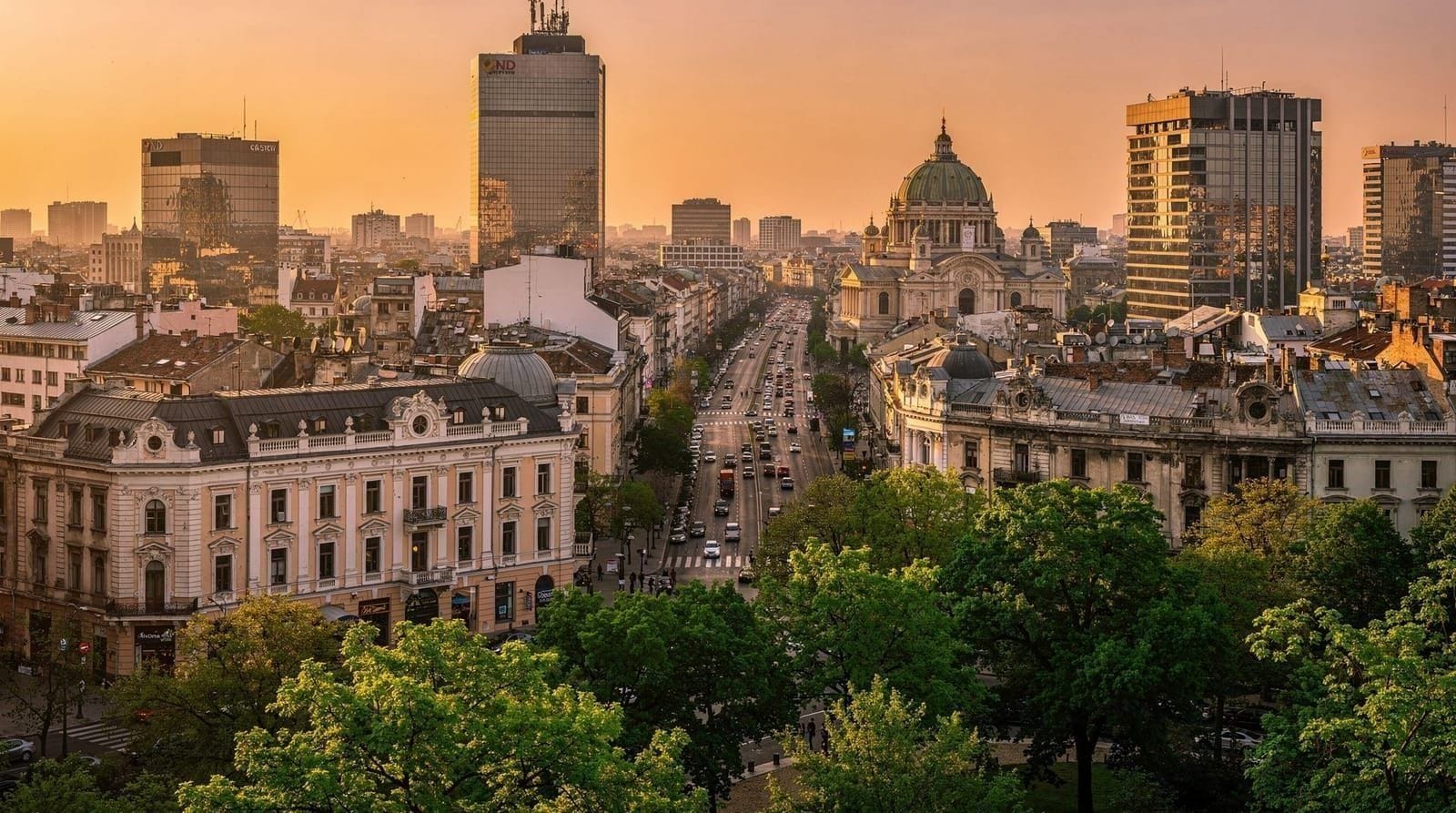
Bucharest in 2 days — the essential weekend itinerary
The secret Bucharest half-day walking tour
Two days is enough to see Bucharest’s most compelling sights without feeling rushed — but only if you plan wisely. This itinerary prioritises walkable clusters, honest price estimates, and a few local spots that are genuinely better than the tourist-trap alternatives on Tripadvisor.
| Where | Bucharest city centre — Old Town, Calea Victoriei, Herăstrău |
| Cost | Around 350–600 RON/day per person, all-in |
| Time needed | 2 full days, no day trips |
| Getting there | Train from Henri Coandă (OTP) to Gara de Nord, ~25 min |
| Best time | Spring or early autumn; avoid peak summer heat for the walking tour |
What to expect in 48 hours
Bucharest rewards slow exploration. The city’s identity sits in uncomfortable layers: belle époque architecture scarred by communist bulldozers, a Palace of Parliament so large it can be seen from orbit, and an Old Town (Lipscani) that oscillates between authentic and overpriced depending on where you look.
In two days you can cover the historic core comfortably on foot, with trams and the metro covering larger gaps. A hire car is unnecessary and actively inconvenient given Bucharest’s parking situation.
Budget snapshot: Expect to spend roughly 350–500 RON (68–97 EUR) per day including a mid-range hotel, meals, entry tickets and a walking tour — more if you eat in tourist restaurants, less if you follow the recommendations below.
Two days at a glance
| Day | Morning | Afternoon | Evening |
|---|---|---|---|
| Day 1 | Lipscani & Old Town core | Palace of Parliament | Dinner in Floreasca |
| Day 2 | Communist Bucharest tour | Calea Victoriei & museum | Old Town dinner (informed) |
Day 1: Old Town, communist landmarks and local dinner
Morning: Lipscani and the Old Town core
Start at Piața Universității (University Square), the symbolic heart of the 1989 revolution. Read the plaques — they’re short and genuinely moving. From here, walk south along Bulevardul Elisabeta toward the old Lipscani district.
The Old Town is most pleasant before 11:00 when the bar-crawl crowd is still asleep. Explore the side streets off Strada Lipscani — Strada Blănari, Strada Gabroveni — where you’ll find the Hanul lui Manuc (a restored 19th-century inn) and the Stavropoleos Church, one of the finest examples of Romanian Orthodox architecture in the city (free entry; small and intimate, not a tourist factory).
For coffee, try Origo on Strada Doamnei — third-wave, locally roasted, reasonable prices (30–35 RON for a flat white). Avoid the café terraces on Strada Franceză itself, which charge 50–70 RON for average coffee backed by aggressive upselling.
See the Old Town Bucharest guide for a street-by-street breakdown of what’s worth your time.
Late morning: Walking tour of the Old Town
A guided walking tour is worth every leu in Bucharest — context transforms what would otherwise be a confusing mix of ruins and renovation. The free tours (tip-based) are genuinely good; paid small-group tours are worth it for the Old Town + Calea Victoriei combination.
An Old Town walking tour typically runs 2.5–3 hours and covers the communist-era demolitions, the 1989 sites, and the medieval street layout. Book morning slots to avoid afternoon heat in summer.
Lunch: Something other than Caru’ cu Bere
Caru’ cu Bere (Strada Stavropoleos 3) is architecturally spectacular and genuinely worth seeing — but eating there costs 180–250 RON/person for food that doesn’t match the setting. Instead, look at it from the entrance, then walk 200m to Lacrimi și Sfinți (Strada Știrbei Vodă 12) for Romanian-influenced modern plates at 60–90 RON/dish. For something cheaper, Vatra on Calea Victoriei does traditional mici and sarmale lunches under 60 RON.
Afternoon: The Palace of Parliament
The Palace of Parliament is visited with a guide. Standard tours (90 min) cover the main halls: the official adult ticket is 85 RON, sold on site only (daily 09:00–17:00, original ID or passport required). Book via GetYourGuide to guarantee a spot, particularly on weekends.
A guided Palace of Parliament tour includes expert context on Ceaușescu’s megalomanic vision — how 40,000 workers built it in shifts, how entire historic neighborhoods were demolished, what was left unfinished when the dictator was executed in 1989.
Allow 2.5 hours including queuing and the tour itself. Exit onto the rear terrace for the view over Izvor Park.
Evening: Dinner in Floreasca or Dorobanți
Skip the Old Town for dinner — the price premium is 30–40% for equal or worse food. Instead, take the metro to Aviatorilor and explore the Floreasca neighborhood. Lacrimi și Sfinți (if you didn’t go at lunch), Vatra or Berăria H (a massive Romanian beer garden on the lake shore in Herăstrău) are all excellent. A full dinner with drinks runs 120–180 RON in these neighborhoods.
Day 2: Communist history, food market and Calea Victoriei
Morning: Communist Bucharest tour
Bucharest’s communist past is not a single landmark — it’s an urban texture that requires interpretation. A 3-hour guided tour covers the key sites: the Victory of Socialism Boulevard (now Bulevardul Unirii), the Casa Radio, the Ceaușescu residence at Primăverii, and the 1989 execution site at Târgoviște (explained, not visited).
A communist Bucharest tour runs most mornings and costs approximately 150–200 RON. Skip the unofficial “communist experience” packages that are overpriced and light on substance. See the communist Bucharest tour guide for what to look for.
Mid-morning: Obor Market or Village Museum
You have two excellent options depending on interest:
Obor Market (Piața Obor, tram or metro): Bucharest’s largest traditional market — covered halls with local produce, cheese, pickles, dried mushrooms. Non-touristy and genuinely cheap (30–50 RON buys a bag of excellent local produce). A good place to try Romanian cow’s cheese (cașcaval) and fresh bread.
Village Museum (Herăstrău Park): An open-air collection of authentic Romanian rural architecture — windmills, water mills, farmhouses — assembled from across the country. Entry is 40 RON. Quiet and atmospheric on weekday mornings. See the Village Museum guide for context.
Lunch: Piața Amzei area
Piața Amzei is a small covered market near Calea Victoriei where local restaurants serve set lunches (meniu de prânz) for 35–55 RON including soup, main course and a soft drink. Walk the square first, then try Pasajul Macca-Villacrosse (a glass-covered Ottoman-era arcade nearby) before sitting down.
Afternoon: Calea Victoriei and the National Museum
Calea Victoriei is Bucharest’s main ceremonial boulevard — the “Little Paris” axis. Walk it north from Piața Națiunilor Unite, noting the contrast between the pre-communist palaces and the communist-era interventions.
The National Art Museum of Bucharest inside the Royal Palace holds Romania’s best medieval and modern art collection. Entry is about 32 RON (free on the first Wednesday of the month). Allow 1.5–2 hours.
For the full neighborhood context, see the Calea Victoriei guide.
Late afternoon: Herăstrău Park
If energy allows (and weather permits), take the metro north to Aviatorilor and walk into Herăstrău Park. Rent a rowboat (80 RON/hour), get an ice cream, and sit by the lake. This is where locals actually spend their free time — a more honest read of the city than the staged touristism of Lipscani.
See the Herăstrău Park guide.
Evening: Dinner in the Old Town — but strategically
If you want the Old Town atmosphere for your last night, go to it informed. Lacrimi și Sfinți and Vatra are both reliable. Avoid restaurants that seat you outside before showing you a menu — that’s the first stage of the Old Town bar scam.
Practical notes for 2 days in Bucharest
Getting around: Metro covers north-south efficiently (current fares on metrorex.ro). Trams are slower but atmospheric. Bolt is reliable for cross-city trips (20–40 RON). Avoid unmarked taxis — see the taxi scams guide.
Airport to centre: Trains from Henri Coandă airport (OTP) run to Gara de Nord in ~25 minutes (6 RON). Bus 783 takes 45–70 minutes to Piața Victoriei (fare on stbsa.ro). Bolt costs approximately 80–100 RON. See the full Bucharest airport to city guide.
Where to stay: The best value is around Piața Romană and Floreasca — good metro access, real neighborhood feel, lower prices than Old Town hotels. For Old Town accommodation expect to pay a 20–30% premium for the noise. See the where to stay in Bucharest guide.
Currency: RON (Romanian leu). Approximately 1 EUR = 5.13 RON. Cards accepted almost everywhere; keep 100–200 RON cash for markets, taxis and small cafés.
If you have a little extra time
Two days is genuinely enough for the core sights, but if your flight times allow a third day, extending is worth considering rather than cramming. The natural addition is a food-focused morning: Bucharest’s restaurant scene rewards a slower look than a 48-hour trip allows, and the Bucharest food guide is worth reading even if you only add a few hours. For evenings, the city’s rooftop scene is better than its reputation — see the rooftop bars guide — and the Bucharest nightlife guide covers where locals actually go rather than the Old Town bar-crawl circuit. If you decide a third day makes sense, the full Bucharest in 3 days itinerary adds Cotroceni, the Village Museum and Herăstrău at a proper pace instead of the compressed version below.
For a deeper food dive on day two, consider swapping the Piața Amzei lunch for a guided walk:
A 4-hour Old Town food walking tour covers several tastings across Lipscani with a guide who explains what you’re eating — a good option if two days feels tight for restaurant research and you’d rather have it curated.
Why Bucharest surprises first-time visitors
Visitors who arrive expecting a grim post-communist capital are usually surprised within the first hour. The belle époque core along Calea Victoriei earned Bucharest the nickname “Little Paris” a century before communism, and much of that architecture survived — see the why Bucharest is called Little Paris piece for the history. The contrast between that legacy and the communist-era interventions is genuinely what makes two days here more interesting than a typical city-break checklist.
Frequently asked questions about this 2-day Bucharest itinerary
Is 2 days enough to see Bucharest?
Two days covers Bucharest’s essential sights — the Old Town, Palace of Parliament, communist history and Calea Victoriei — without feeling rushed. You won’t see everything, but you’ll get a genuine sense of the city rather than a superficial sweep. If you want day trips to Sinaia or Bran Castle, budget 3 days minimum.
Do I need a car for 2 days in Bucharest?
No. Bucharest’s metro and trams handle all the locations in this itinerary. A car adds parking complications and is not recommended for a pure city break. If you plan to add a Sinaia day trip or Brașov day trip, a rental car or organised tour is better than using public transport.
What’s the best area to stay for a short visit?
Piața Romană or Floreasca for the combination of metro access and neighbourhood authenticity. The Old Town (Lipscani) puts you near the sights but is noisy at night (bars operate until 3–4am) and overpriced by Bucharest standards. See the where to stay guide for specific hotel recommendations.
How much does 2 days in Bucharest cost?
Budget travellers: 200–300 RON/day (accommodation in a hostel or budget hotel, street food and set lunches, free/cheap sights). Mid-range: 400–600 RON/day (3-star hotel, sit-down meals, one or two paid tours). The Palace of Parliament tour (from 85 RON) and a walking tour (80–150 RON) are the main paid commitments.
What are the biggest tourist traps to avoid in 2 days?
The Old Town bar scam (strangers invite you for drinks, inflated bill arrives); overpriced cab rides from the airport; hotel-recommended “local experience” restaurants that are neither local nor experiences. Read the Bucharest scams guide before you arrive — it takes 10 minutes and will save you real money.
Should I book anything before I arrive?
Book the Palace of Parliament tour and, if you want a specific morning slot, the Old Town walking tour — both fill up on weekends. Restaurants generally don’t need reservations except Caru’ cu Bere on Friday/Saturday evenings. Everything else on this itinerary can be decided on the day, which is part of what makes 2 days in Bucharest manageable rather than stressful.
Top experiences
Bookable activities with verified prices and instant confirmation on GetYourGuide.