Transylvania day trip from Bucharest — Bran, Peleș and Brașov tours reviewed
Bucharest: Excursion to Dracula's castle with lunch included
The Bran–Peleș–Brașov day trip is the most popular single-day excursion from Bucharest, and for good reason: it packages three genuinely impressive attractions — a Gothic castle marketed as Dracula’s, Romania’s most spectacular royal residence, and Transylvania’s most photogenic medieval city — into a single long day. It is also the most over-sold and occasionally disappointing experience on the market. This review explains what you actually get, what each tour costs, and which version is worth booking.
| Where | Bran, Sinaia (Peleș) and Brașov — 125–160km north of Bucharest |
| Cost | Shared tour: 250–350 RON pp, plus ~140 RON entry tickets |
| Time needed | Full day, around 12–13 hours door to door |
| Getting there | Guided minivan; a rental car is possible but demanding solo |
| Best time | Weekdays (Tue–Thu), outside July–August peak |
The three stops explained
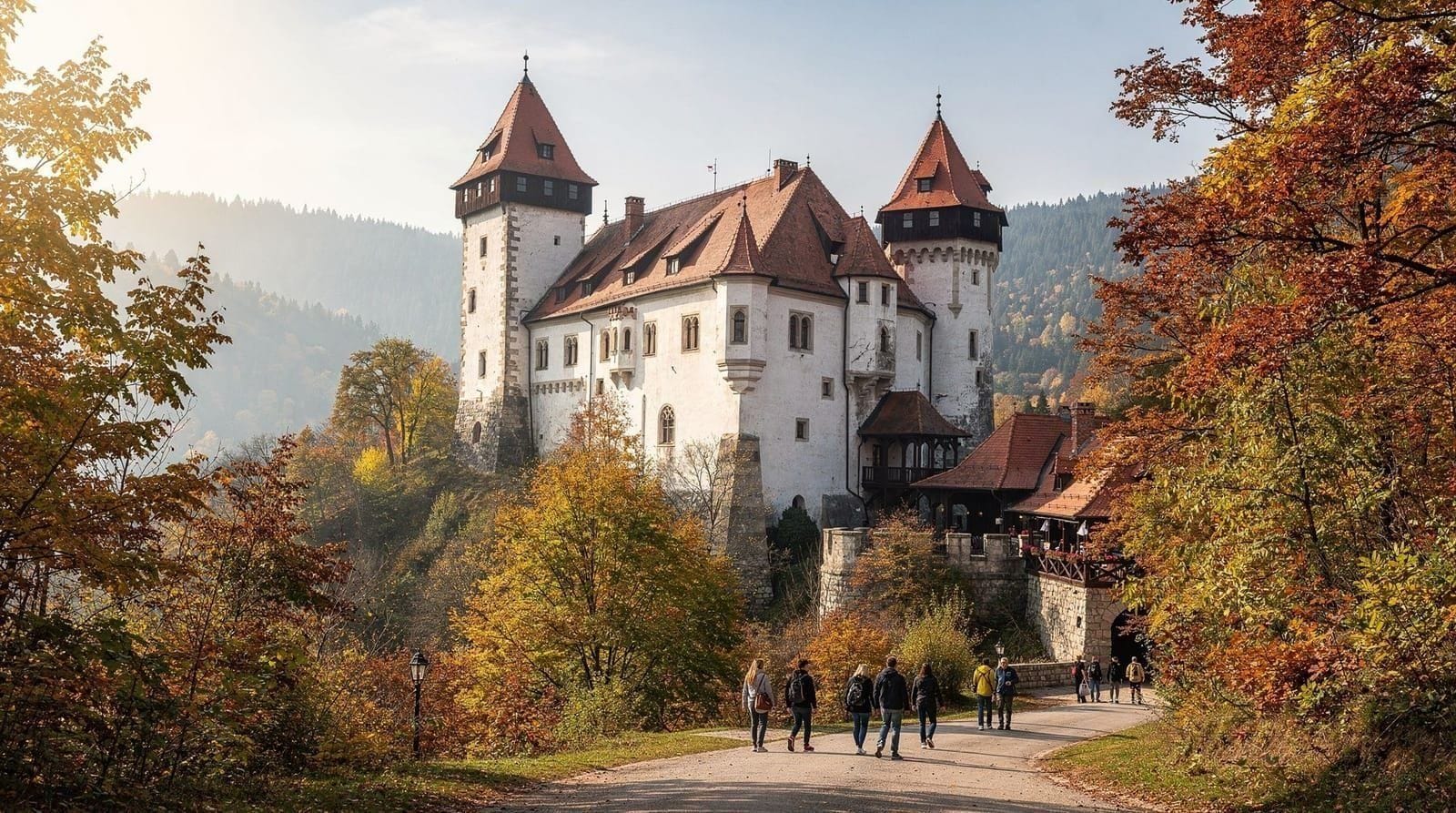
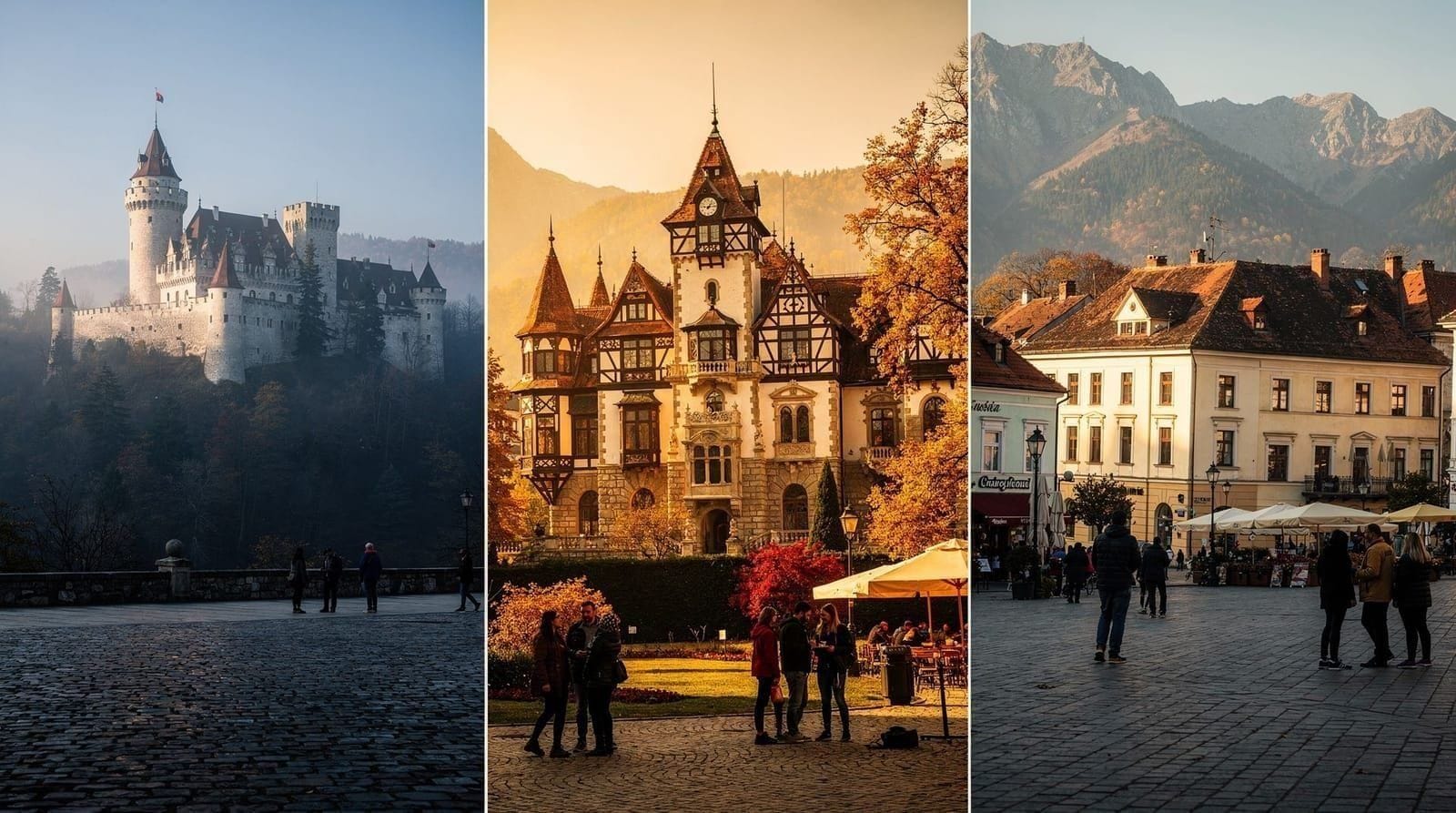
Bran Castle is the famous silhouette on every postcard. The castle is atmospheric and genuinely medieval, but the Dracula connection is shaky — Vlad Țepeș had at most a fleeting administrative link to Bran, and Bram Stoker almost certainly never visited Romania. What Bran actually is: a well-preserved 14th-century fortress that served as a Romanian royal summer residence until 1948. Its rooms are furnished with Habsburg-era pieces and the interiors are legitimately interesting. Budget 45–60 minutes here. Read our Bran Castle guide for the full historical picture.
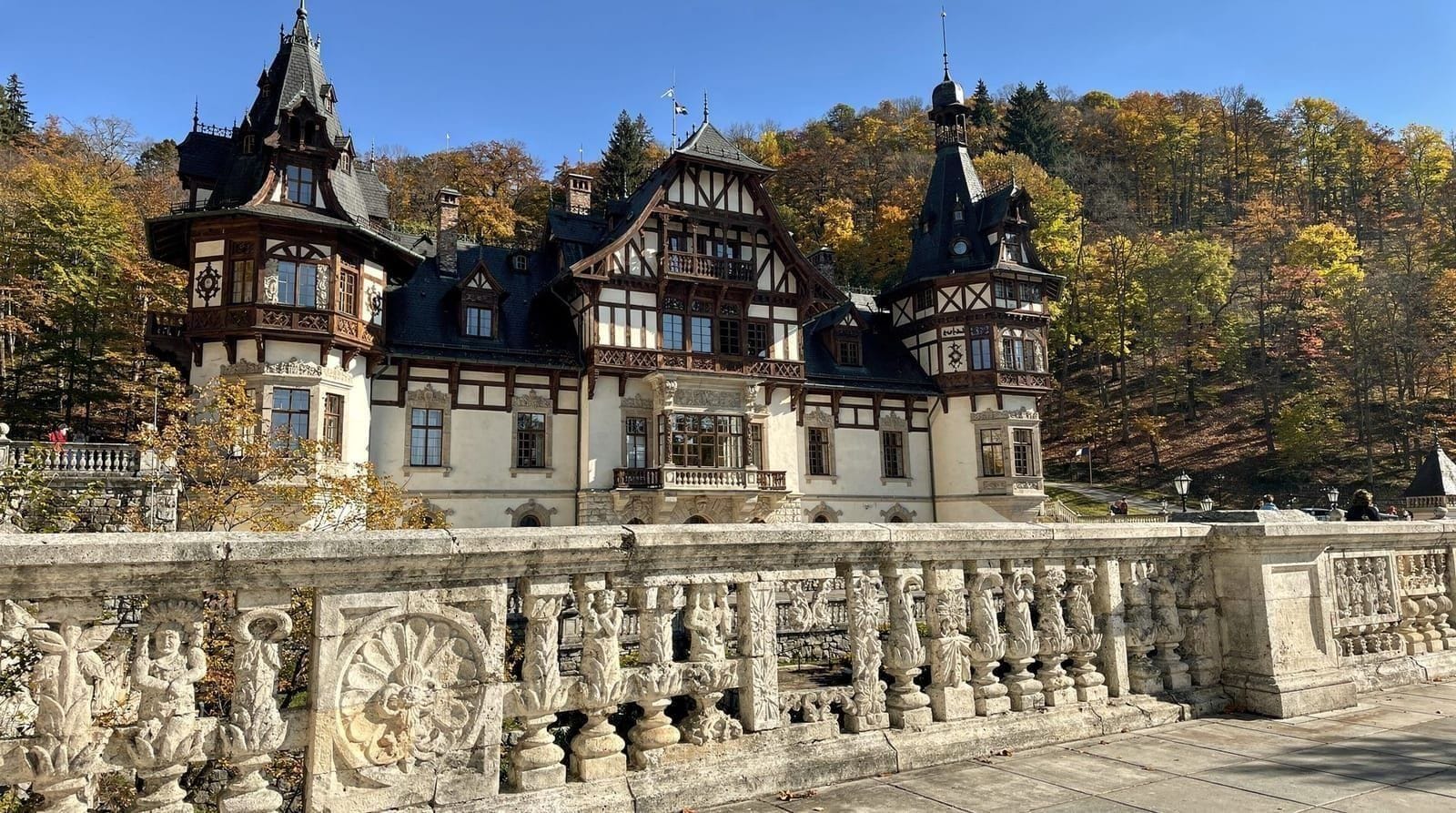
Peleș Castle in Sinaia is architecturally richer and less crowded than Bran. Built between 1873 and 1914 for King Carol I, it is an extraordinary neo-Renaissance pile filled with carved wood ceilings, stained glass, Murano chandeliers, and one of the first central heating systems in Europe. Many visitors find it the highlight of the day. Allow 45–60 minutes for a standard guided visit of the main floors. The Peleș Castle guide on this site has room-by-room detail.
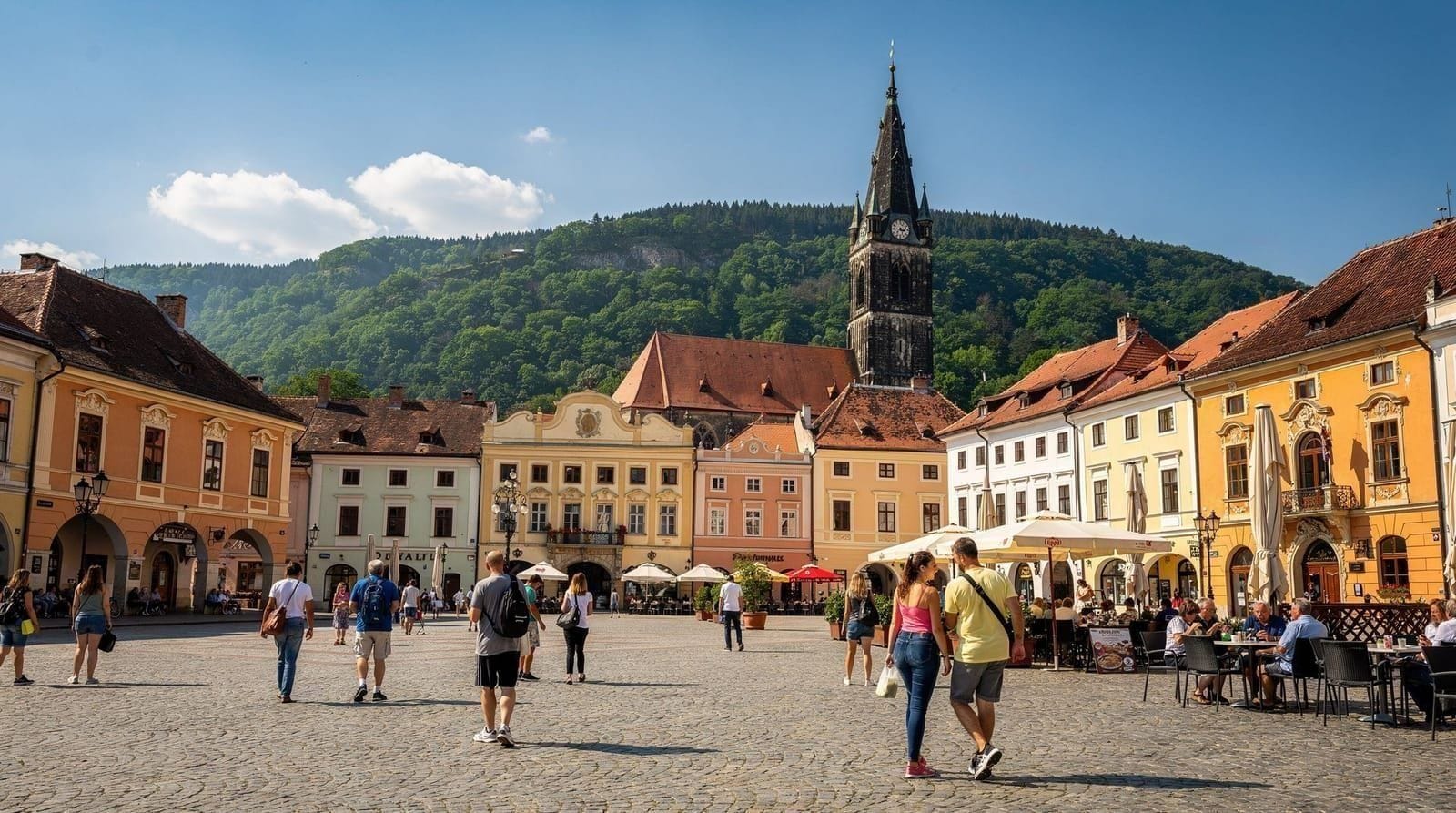
Brașov is a Saxon fortified city at the foot of the Carpathians. Most tours stop for 1–1.5 hours in the old town — enough to walk through Piața Sfatului, see the Black Church, and have a quick lunch. It is not enough to climb to the fortress or explore the neighbourhoods, but it is a worthwhile stop. See our Brașov destination guide for more.
What a typical day looks like
Minivans depart central Bucharest hotels between 7:30 and 8:30. The route is usually: Bucharest → Sinaia (Peleș) → Bran Castle → Brașov → back to Bucharest, arriving around 20:00–21:00. Some tours reverse the order. The drive Bucharest to Sinaia takes around 1.5–2 hours; Sinaia to Bran around 1.5 hours; Bran to Brașov about 35 minutes; Brașov back to Bucharest roughly 2.5 hours.
Total drive time in a day: around 7–8 hours. Time actually on-site: roughly 3–4 hours across three locations. That is the honest arithmetic of a Transylvania day trip.
Tour prices and what is included
Shared group tours (8–20 people) run 250–350 RON (50–70 EUR) per person. Most include transport and a bilingual guide. Castle entry tickets are usually extra — budget an additional 140 RON (28 EUR) for Bran and Peleș combined. Some premium tours include lunch and all tickets; check the listing carefully.
Private tours for 2–6 people cost 600–1,200 RON (120–240 EUR) per person depending on group size, and give significantly more flexibility over pace and stop sequence.
Transylvania day trip with lunch included — best value shared tour Peleș–Brașov–Bran day trip — popular alternativeWhich tour should you book?
The lunch-included option is genuinely better value than tours that list a lower headline price but exclude tickets and food — by the time you add entry fees and a sit-down meal in Brașov, the all-in cost is similar. Calculate total spend before committing to the cheaper-looking listing.
Private tours are worth it for families with children, travellers who want to linger at one site and skip another, or anyone visiting in peak season (July–August) when shared minivans fill fast and the guide is stretched thin across 15+ people.
If you want only the castle experience without Brașov, the two-castles-only options cover Bran and Peleș in a slightly tighter day with more time at each stop. The best day trips from Bucharest guide compares all the main variants.
Honest assessment: is the day trip worth it?
Yes, if you only have one day for Transylvania. No major regrets for most travellers. The experience is rushed at every stop — you are always aware of the group returning to the van — but the sites are spectacular enough that even 45 minutes at Peleș is memorable.
The reality check: if you have two or more days available, overnight in Brașov or Sinaia instead. The Brașov day trip guide explains what you gain with more time. The Sinaia day trip guide covers the Prahova Valley route separately.
Avoid the very cheapest operators (under 200 RON / 40 EUR per person for a tour claiming to include all three sites plus entry). Those tours typically rush all three stops in under 8 hours and skip guide commentary at one or more locations.
Peleș, Bran and Brașov day trip — alternative operatorPractical notes
- Pickup is from major hotels and a central meeting point (usually Piața Unirii or similar). Confirm exact pickup before booking.
- Dress in layers. Bran and Peleș are mountain locations — even in July, mornings are cool.
- Bran Castle has a large outdoor souvenir market that absorbs some people’s on-site time. Budget your minutes accordingly.
- The Transfăgărășan road is not on this route — that is a separate excursion. See the Transfăgărășan guide and our Transfăgărășan tour review.
What the guide actually does — and what to look for in a good one
The quality range among Transylvania day trip guides is wide. A guide reading from a prepared script about Bran Castle’s Dracula connection and Peleș’s chandelier count is a different experience from one who can field questions and offer genuine context. The difference matters on a 10-hour day.
The clearest test of a strong guide is whether they can explain the ownership history of the two main castles accurately. Bran Castle was confiscated from the Romanian royal family in 1948 when the communist government forced King Michael to abdicate. After decades as a state-run museum, it was returned in 2006 to Princess Margareta, the daughter of King Michael, as part of a broader restitution process. Margareta subsequently renovated the castle and opened it to tourism under private management. This is the reason Bran looks more polished than many Romanian state museums — it has had private investment. A guide who knows this is working from genuine knowledge rather than promotional copy.
Peleș Castle’s situation is the reverse and more politically sensitive. The palace was nationalised in 1948, has remained state property ever since, and the question of restitution to the royal family has been contested in Romanian courts for years. The post-communist government has resisted returning it, partly on cultural patrimony grounds, partly for reasons of political awkwardness. A guide who knows that Peleș is still state-owned while Bran is privately managed — and can explain why — understands the political landscape.
Two questions that reveal a guide’s depth:
Ask about communist-era renovations at Peleș. During the 1970s and 1980s, the palace was used by the Ceaușescu family as a presidential retreat, and certain renovations were carried out to their taste. A knowledgeable guide can identify what was original to the royal period and what was modified or added under the communist regime. Most guides glossed over this for years; the better ones now address it directly.
Ask why Bran Castle has a Dracula Museum on the grounds. The Dracula Museum is a separately ticketed basement installation based on Bram Stoker’s novel — which has essentially no historical connection to Bran. It exists because the tourist market created demand and the private management found it profitable. A guide who is honest about this, rather than softening the contradiction, is demonstrably more reliable on everything else they tell you.
Planning the trip for different travellers
The standard itinerary — Peleș, Bran, Brașov — is not equally good for every type of traveller. Priorities shift depending on who is making the trip.
Families with children: Peleș is the better castle for children. The interiors are more dramatically varied — carved wooden ceilings, suits of armour, stained glass, and a theatre within the palace — and the grounds allow more movement between stops. Bran’s interior route through low-ceilinged connecting passages between towers is atmospherically interesting but physically tighter and queue-dependent, which is frustrating with restless children. Brașov’s main square (Piața Sfatului) has outdoor space and is more child-manageable than either castle.
Photographers: timing matters. The best light at Bran is in the morning, when the sun hits the castle’s north and west faces and the towers photograph without the flat overhead light of midday. The classic Bran exterior shot — the view of the towers rising above the trees — is taken from the road below the castle parking area, not from the castle entrance itself. At Peleș, afternoon light works better: the south-facing main facade catches direct sun from early afternoon onward, and the ornamental detail on the exterior reads well in angled light. Most tours do Peleș first (Sinaia is closer to Bucharest), which means reaching Peleș in the morning. If photography is your priority and you have flexibility, a private tour allows you to reverse the order.
History enthusiasts: Peleș over Bran without hesitation. The royal history of Peleș — from King Carol I’s commission in 1873 through the successive reigns that shaped the palace’s rooms — is richer, better documented, and more directly connected to Romania’s modern history than Bran’s medieval and early modern story. The palace’s role as a private royal residence until 1947, the art collection accumulated by successive queens (particularly Queen Marie), and the question of what happened to it under communism are all substantive topics. Bran’s historical documentation is thinner and more contested.
What to eat on the day trip
Most tours include a lunch stop, either in Brașov’s old town or at a Transylvanian restaurant between castle stops. The food component of the day is rarely highlighted in tour listings but is worth thinking about in advance.
Transylvanian cuisine is a distinct regional variant of Romanian food with stronger Saxon and Hungarian influences than Bucharest cooking. Worth ordering: sarmale cu smântână (stuffed cabbage rolls with sour cream — the Transylvanian version tends to use more pork and smoked meat than the Bucharest version), ciorbă de burtă (tripe soup with vinegar and sour cream, a traditional hangover cure that is better than it sounds), and mici with mustard if there is a grill nearby. Grilled trout (păstrăv) appears on menus near mountain towns and is typically sourced locally.
In Brașov, Strada Republicii — the main pedestrian street — has several mid-range restaurants with solid traditional menus. They are not hidden gems, but they are reliable and reasonably priced for a tourist-facing street. The restaurants immediately adjacent to the Bran Castle parking area and souvenir market are a different matter: they operate in the same register as the Vlad Dracul-branded snacks and carved wooden stakes in the market — priced for visitors who will not return, with menus oriented toward what tourists expect rather than what Transylvanians actually eat. A guide who directs the group away from the castle-adjacent restaurants and into Brașov for lunch is making a sound call.
Bran vs Peleș vs Brașov: comparing the three stops
Not all three stops deliver equally, and knowing what each one is actually good for helps you manage expectations before you commit to the long day.
| Stop | Best for | Time on-site | Skip if… |
|---|---|---|---|
| Bran Castle | Atmosphere, Dracula lore, photos | 45–60 min | You dislike crowds and souvenir markets |
| Peleș Castle | Architecture, interiors, history | 45–60 min | You’ve already seen it on another trip |
| Brașov old town | Walking, lunch, Saxon architecture | 60–90 min | You’d rather overnight there properly |
Travellers who read this comparison and decide a single rushed day isn’t the right fit have good multi-day alternatives. The Bucharest and Transylvania 5-day itinerary spreads Bran, Peleș and Brașov across separate days with an overnight in Brașov, so each stop gets proper time instead of 45 rushed minutes. The Dracula trail 4-day itinerary is a good fit if the Vlad Țepeș history specifically is the draw, since it adds Poenari Castle — the genuine historical fortress — alongside Bran. Either multi-day route also removes the single biggest source of frustration with the one-day version: the return drive to Bucharest after dark, arriving back in the city tired at 20:00–21:00 with no energy left to enjoy an evening in the capital.
Best time of year for the Transylvania day trip
| Season | Conditions | Crowds | Notes |
|---|---|---|---|
| Dec–Feb | Cold, occasional snow | Moderate | Bran and Peleș look striking under snow; some outdoor stops shorten |
| Mar–May | Mild, changeable | Low–moderate | Good value; pack a layer for morning chill |
| Jun–Aug | Warm, 20–30°C | High, especially weekends | Long queues at Bran; go on a weekday tour if possible |
| Sep–Oct | Mild, clearer light | Low–moderate | Generally the best trade-off of weather and crowds |
| Nov | Cold, damp | Low | Quietest month, but some sites reduce hours |
The best time to visit Bucharest guide covers how this fits the wider Romania trip calendar, and the best day trips from Bucharest guide compares this itinerary against Sinaia-only and Transfăgărășan-only alternatives if a full Transylvania day feels too packed.
Frequently asked questions about the Transylvania day trip
How far is Transylvania from Bucharest?
Bran Castle is around 160 km from central Bucharest, approximately 2.5–3 hours by road. Peleș Castle in Sinaia is closer at 125 km. Day tours typically leave at 7:30–8:30 and return around 20:00–21:00.
Is the Transylvania day trip worth it from Bucharest?
Yes for most travellers — it is the most efficient way to see three top Romanian attractions in one day without a rental car. The trade-off is pace: you get 45–60 minutes at each castle.
What is actually included in the tour price?
Most shared-group tours include transport and a guide but NOT castle entry tickets. Bran Castle entry is from about 40 RON (8 EUR; exact price on bran-castle.com); Peleș is 100 RON (20 EUR) for the main castle. Premium tours include lunch and tickets — check before booking.
Is Bran really Dracula’s Castle?
No — the Hollywood connection is very thin. The real historical Vlad Țepeș fortress is Poenari Castle in the Carpathians. See our guide on Bran Castle for the honest history.
What is the best day to take this tour?
Weekdays (Tuesday–Thursday) are significantly less crowded. Weekends in July and August see long queues at Bran Castle.
Can I do this trip without a tour?
Visiting all three sites in one day without a car is very difficult with public transport alone. Renting a car is a good alternative — see our car rental guide.