Bucharest food tour — which walking food tour is actually worth booking?
Bucharest: 4 hour walking food tour in the Old Town
Duration: 4 hours
Romanian food does not have the international profile of Italian or French cuisine, but it has depth, history, and regional variation that rewards curiosity. Bucharest’s old town has the widest range of restaurants in Romania, alongside a concentration of tourist traps that serve watered-down versions of traditional dishes at inflated prices. A food tour solves the navigation problem and adds cultural context that menus cannot provide.
| Where | Old town (Lipscani) and nearby covered markets |
| Time needed | 3–4 hours |
| Cost | Around 180–350 RON per person, includes tastings |
| Group size | Best under 10 people |
| Best time | Book for the first full day of your trip, before lunch |
What Romanian food is actually about
Romanian cuisine evolved in a crossroads between Ottoman, German, Hungarian, and Balkan culinary traditions. The result is a cuisine that is meat-heavy, stew-rich, and built around preserved and fermented flavours — pickles, soured cream, fermented cabbage — that reflect a historical need for winter sustenance in a pre-refrigeration world.
The key dishes that good food tours cover:
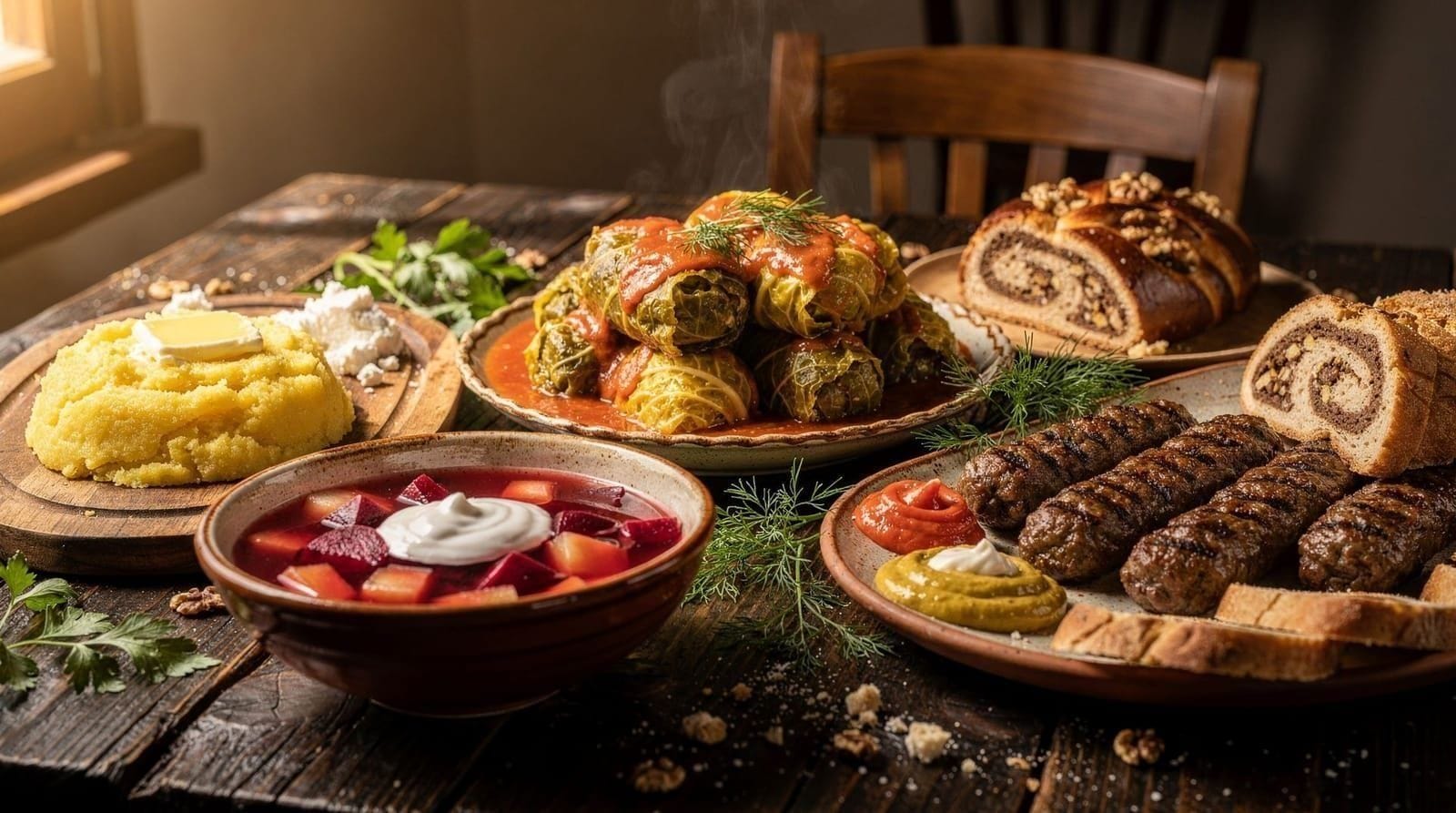
Sarmale — stuffed cabbage leaves or grape leaves filled with minced pork, rice, and aromatics, cooked slowly in tomato-and-sauerkraut liquid. The national dish in the sense that it appears at every family celebration. Quality varies enormously between restaurants.
Mici (mititei) — short grilled rolls of minced beef and pork with garlic, black pepper, and sodium bicarbonate, served with mustard. Street food at its best, found at every grătar (grill). Best eaten hot from the grill, not reheated.
Ciorbă — sour soups thickened with eggs and sour cream, sourced with bors (fermented wheat bran), vinegar, or lemon juice. The sourness is distinctive. Ciorbă de burtă (tripe soup) and ciorbă de fasole cu afumătură (bean soup with smoked sausage) are the most traditional versions.
Mămăligă — polenta-like cornmeal porridge, the historical staple of Romanian peasant cooking. Often served with sour cream and crumbled brânză (sheep’s cheese). Not glamorous but essential context for Romanian food history.
Papanași — fried dough doughnuts (or sometimes boiled) served with sour cream and sweet jam. The Romanian dessert that consistently surprises visitors expecting something lighter.
Cozonac — sweet plaited bread with walnut, poppy seed, or Turkish delight filling, made at Easter and Christmas. Bakery versions sold year-round are good but not as rich as home-made.
The best food walking tours
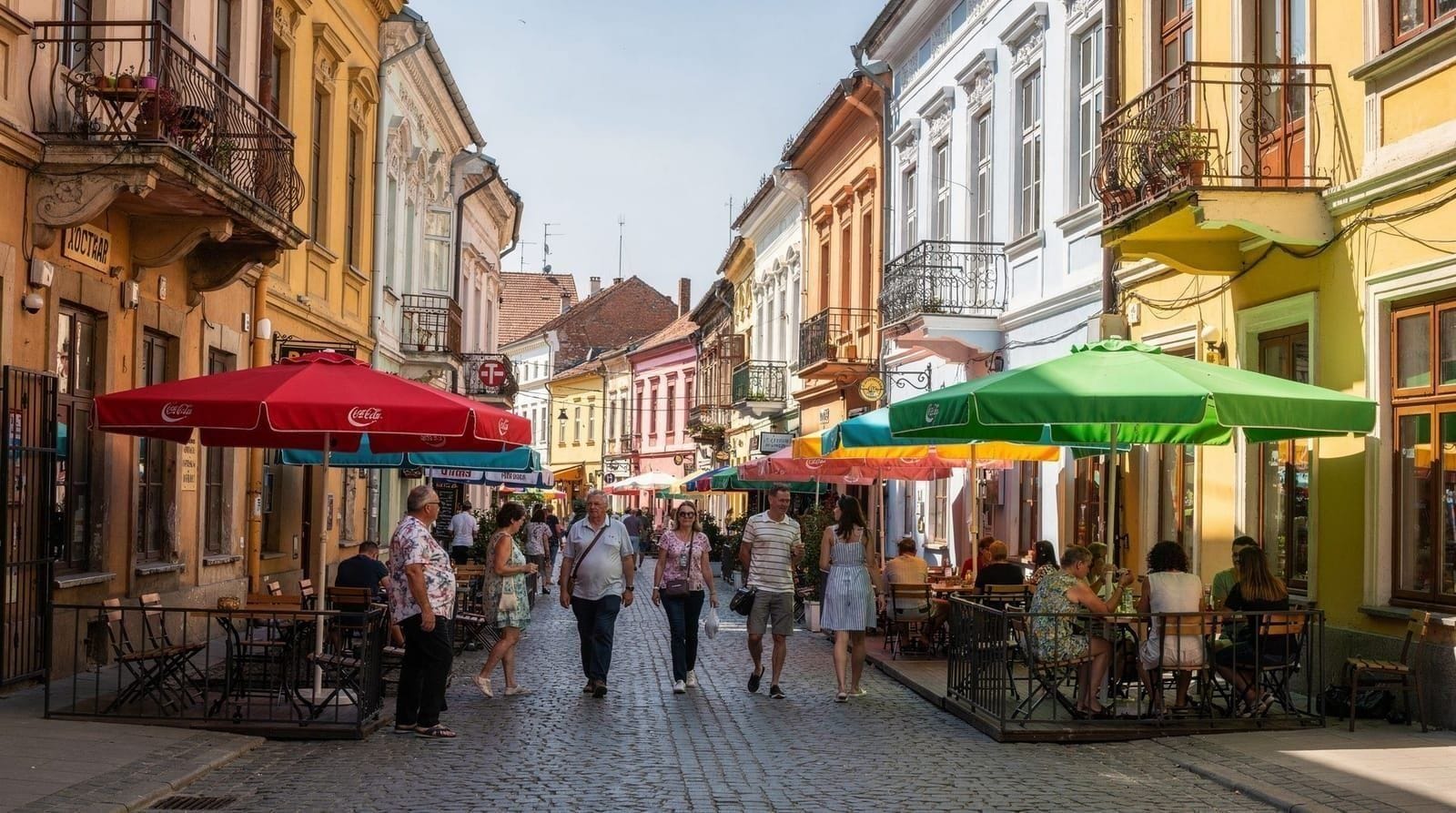
The 4-hour food tour of the old town is the benchmark option. It covers 6–9 stops in and around Lipscani, visiting a mix of sit-down traditional restaurants, bakeries, delicatessens, and street food vendors. The best operators use locally-owned spots, not the tourist-facing chains on the main drag.
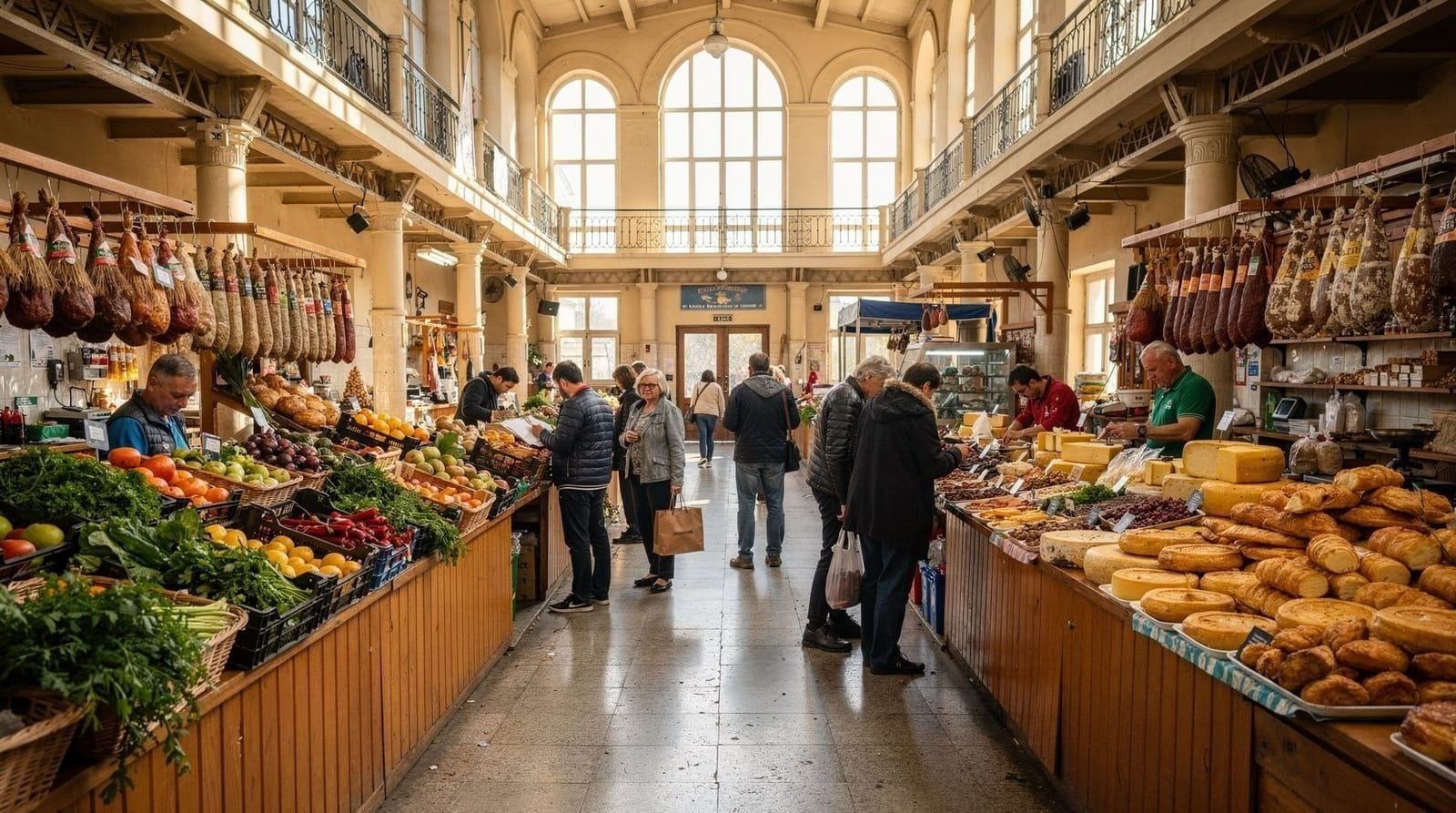
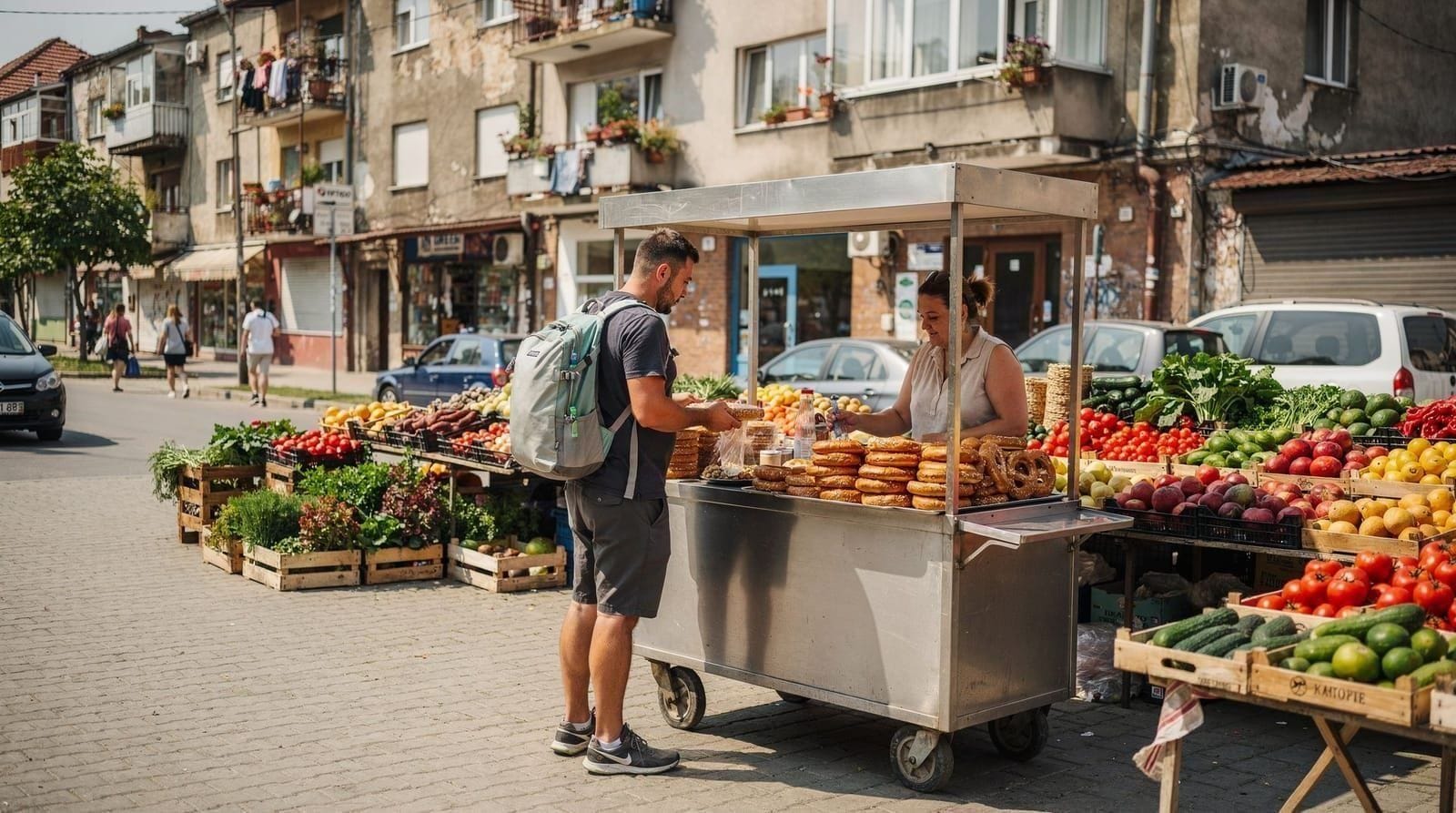
4-hour food walking tour of Bucharest old townThe walking food tour that includes hidden markets adds Piața Amzei or Obor to the route — a genuine behind-the-scenes dimension that makes the tour more interesting for curious travellers. Piața Amzei is a covered market near Calea Victoriei selling local cheeses, cured meats, seasonal vegetables, and honey. The vendors know their products and a good guide introduces you to producers.
Hidden markets food tour — Bucharest’s secret quartersThe culinary and cultural walking tour combines food stops with neighbourhood history — explaining Ottoman merchant buildings, interwar Art Deco cafés, and communist-era state restaurants (now converted or closed) alongside the tastings. This hybrid format suits travellers who want both food and context.
Taste and tale — culinary and cultural walking tourPrices in RON and EUR (2026)
- 3-hour food tour (4–6 stops): 180–250 RON (36–50 EUR) per person
- 4-hour food tour (6–9 stops): 220–350 RON (44–70 EUR) per person
- Hidden market + food tour (4–5 hours): 280–400 RON (56–80 EUR) per person
- Private food tour (2–4 people): 500–900 RON (100–180 EUR) for the group
Most tours include tastings sufficient for a light lunch — you will not need a sit-down meal immediately afterwards.
What to look for when booking
Stop count and names: good operators list specific restaurants and markets in the tour description. If the listing only says “various traditional restaurants,” ask for details before booking.
Group size: food tours work best in groups under 10. Larger groups struggle to all taste at once and the narrative becomes harder to follow. Cap of 8–10 is ideal.
Meal replacement or supplement: the best food tours replace lunch rather than requiring a separate restaurant visit. Check whether you will be full at the end.
Language: all food tours listed here run in English. Some operators offer French, German, or Spanish alternatives — confirm language before booking.
Pairing the food tour with independent eating
A food tour on day 1 of a Bucharest visit gives you an instant map of what to eat and where for the rest of your stay. The Bucharest food guide and where to eat in Bucharest guide complement this with specific restaurant recommendations across price ranges.
For deeper reading: the traditional Romanian dishes guide covers the regional variations and history of each dish in detail. The Bucharest on a budget guide includes food tips for travellers watching spend.
Honest verdict
Food walking tours in Bucharest are one of the genuinely good value experiences in the city. They expose travellers to places they would otherwise miss, explain a cuisine that is underrepresented in international food writing, and cost less than a decent restaurant dinner in most Western European capitals. The 4-hour option beats the 3-hour format meaningfully — the extra time buys 2–3 additional stops and a less rushed pace.
What to avoid: the “food tour” that is primarily a sightseeing walk with token food at two stops (these exist on some platforms at very low prices). If tastings are listed as vague “samples” rather than specific dishes, query before booking.
Romanian wine on the food tour
Romanian wine is consistently underrated by visitors and represents one of the more pleasant discoveries available on a food tour that includes tastings. The country has been producing wine for over 3,000 years — longer than France — and has a range of native grape varieties that are genuinely distinct from the international varieties most visitors know.
The most important wine-growing regions to know before your visit:
Dealu Mare (Big Hill), in the Subcarpathians northeast of Bucharest, produces the bold reds that represent Romania’s best international competition claim. The key native variety here is Fetească Neagră (Black Maiden) — a full-bodied red with dark fruit and an earthy depth that has no real equivalent in Western European wine. Dealu Mare also grows Cabernet Sauvignon and Merlot well, but the native varieties are more interesting and harder to find elsewhere.
Murfatlar, near Constanța on the Black Sea, produces full-bodied whites and some of Romania’s best dessert wines. The climate is warmer and drier than the Carpathian valleys, which creates concentrated flavours in sweet late-harvest wines.
Cotnari, in northern Moldova (within Romania’s borders, not the Republic of Moldova), has a historic reputation for white wines dating to the medieval period. The distinctive native grape is Grasă de Cotnari, a naturally sweet variety that produces wines with honeyed complexity. King Stephen the Great of Moldova reportedly served Cotnari wine to diplomatic guests in the 15th century.
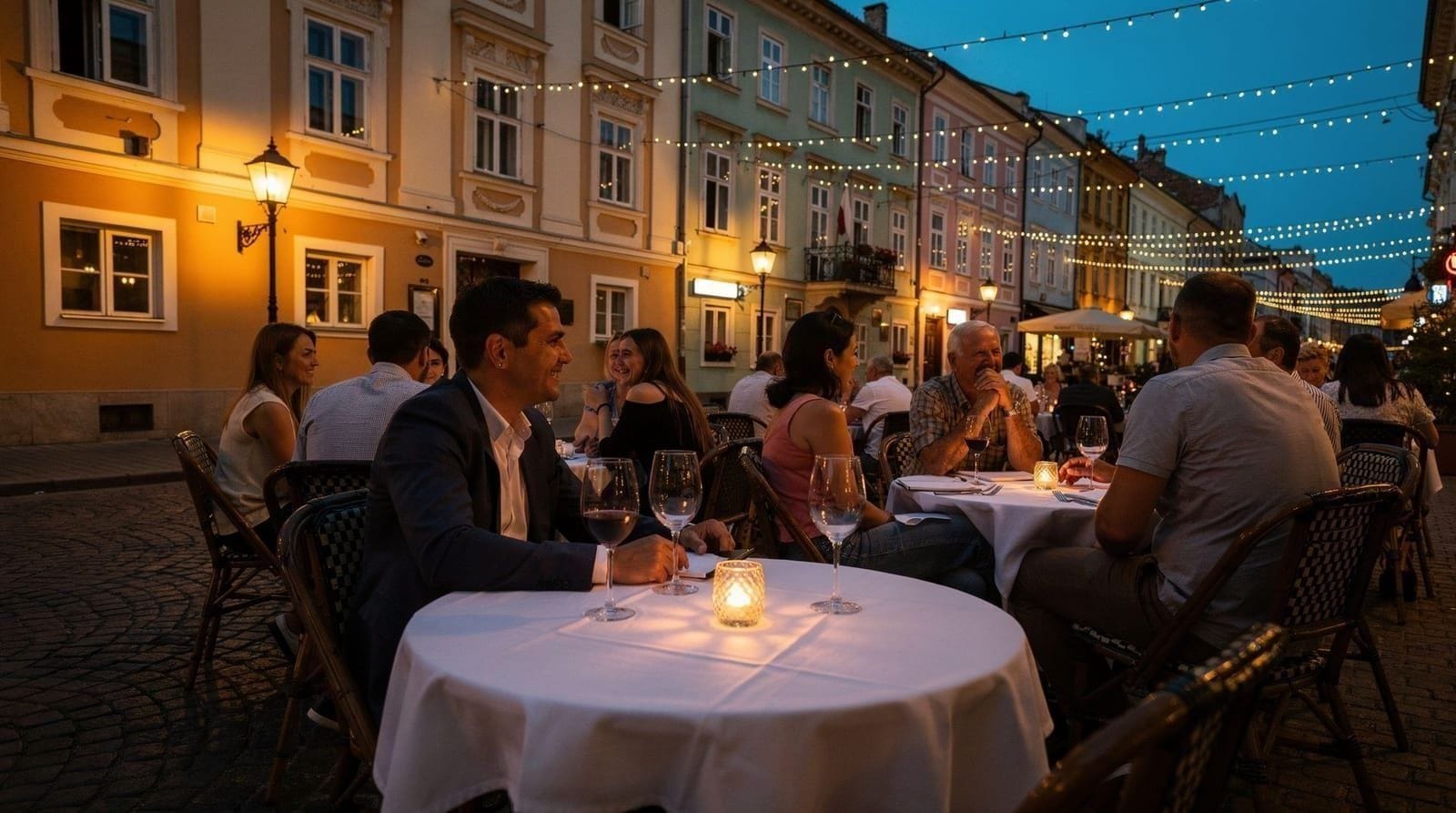
The food tour wine stop is typically at a wine shop or cramă (cellar) venue in or near the old town — operators often use spots on or near Calea Victoriei where Romanian wines from different regions can be tasted side by side. Ask your guide specifically about native varieties: Fetească Albă (White Maiden), a versatile white; Fetească Neagră (the red already mentioned); and Tămâioasă Românească (Romanian Frankincense), a muscat-derived variety with floral aromatics that is essentially unknown outside Romania. These grapes do not appear on international wine lists and will not be available in your home country’s shops — the food tour wine stop is a genuine opportunity to taste something you cannot access elsewhere.
The covered market experience
Piața Amzei is a covered market located just off Calea Victoriei near Piața Romană, open from early morning to early afternoon on most days. It is not a spectacular architectural space — the current building is functional rather than beautiful — but it functions as a genuine local food market in a way that few accessible spots in central Bucharest still do.
The market sells:
Brânză de burduf — sheep’s cheese aged inside a fir bark casing (burduf = bellows, referring to the sheepskin container traditionally used). The fir bark imparts a distinctive resinous, slightly smoky aroma that distinguishes it from other sheep’s cheeses. It is a product of the mountain shepherd tradition and is made in the Apuseni and Bucegi regions. Quality varies between stalls; a food tour guide who knows the market will take you to the vendor they trust.
Caș — fresh sheep’s cheese, mild and slightly elastic, eaten within days of production. It is the ingredient base for several other Romanian cheeses and on its own functions as a snacking cheese with bread and tomatoes.
Salam de Sibiu — the Romanian cured salami with EU Protected Geographical Indication status, produced in and around Sibiu in Transylvania. Distinguished by its white mould rind (similar to a dry-cured French saucisson) and a fine-ground texture with a pronounced black pepper note. The real product is noticeably different from supermarket imitations and is one of the better-documented achievements of Romanian charcuterie.
Honey and seasonal produce from smallholders around Bucharest — vendors at Piața Amzei have often been working the same stall for 20 years or more, selling what they and their families produce. The honeys range from acacia (very light, floral) to forest honey (darker, mineral) and polyfloral meadow varieties.
The market is authentic enough that tourist-facing scripts are thin on the ground. Most vendors speak Romanian only; a guide who knows them by name and can translate adds real practical value here. This is where the food tour delivers something genuinely different from what an independent visitor can easily access.
Food tour as pre-trip research
There is a practical argument for booking a food tour on the first full day of a Bucharest visit rather than treating it as a later-trip indulgence: the information you acquire on the tour shapes every subsequent meal during your stay.
After a good 4-hour food tour you will know: which dishes to order and which versions of those dishes to specifically look for (sarmale is better slow-cooked, mici is better from a grătar than a sit-down restaurant, ciorbă is made fresh in the morning and deteriorates through service), which restaurants are worth revisiting independently (your guide will have told you, directly or indirectly), and where the tourist-facing price inflation is most severe and how to route around it.
The best guides will also point out calibration details that are not in any guidebook. For instance: ciorbă is a lunch dish — made fresh in the morning and running out by mid-afternoon in traditional restaurants. Ordering it at dinner in a tourist restaurant means eating a reheated version that has been sitting since noon. Similarly, the papanași at Caru’ cu Bere (Str. Stavropoleos 5 — the spectacular 1879 Art Nouveau brasserie with the vaulted tiled interior) are worth paying the tourist-location premium for, despite the restaurant’s reputation as a tourist trap: the pastry kitchen is genuinely good and the room alone justifies one visit. A food guide who knows both these things and communicates them is giving you a practical advantage for the rest of your trip.
The combination of a food tour on day 1 with the Bucharest food guide on this site gives a complete practical orientation to eating well in Bucharest across all price points.
Drinks beyond wine: what else you might taste
Wine is only part of the drinks picture on a good food tour. Two other Romanian drinks are worth knowing before your tour, as guides sometimes offer them as an optional add-on or a closing tasting.
Țuică is a traditional plum brandy, distilled from fermented plums and typically 24–35% alcohol. It is the everyday spirit of rural Romania, made at home in the autumn after the plum harvest, and it varies enormously in quality — a well-aged, double-distilled țuică from a family producer is a different drink entirely from the harsh, fast-made versions sold to tourists. Palincă, the Transylvanian version, is distilled to a higher proof (often 40–52%) and has a more concentrated, sometimes fruit-forward character. A food tour that includes a proper palincă or țuică tasting, rather than a single shot poured without context, is a sign of a more serious operator.
Socată, a mildly fermented elderflower soft drink, is the non-alcoholic counterpoint — light, slightly tart, and traditionally homemade in early summer when elderflower is in bloom. It rarely appears on food tours outside the elderflower season (roughly May–June) but is worth asking about if your visit falls in that window.
Booking with children or dietary needs
Families travelling with kids can generally join standard food tours, though check the walking distance and pace with the operator first — young children tire on 4-hour routes with 3–4 km of cumulative walking through Lipscani’s cobbled lanes. The Bucharest with kids guide has more on pacing a family day around a food tour.
For those on a tighter budget, pairing a shorter 3-hour tour with independent meals from the Bucharest on a budget guide keeps costs down while still getting the orientation value of a guided introduction. A single 4-hour tour on day one, followed by three or four days ordering confidently from what you learned, is generally better value than several shorter tastings spread across a trip.
Frequently asked questions about the Bucharest food tour
What do you eat on a Bucharest food tour?
Sarmale (stuffed cabbage), mici (grilled meat rolls), ciorbă (sour soup), mămăligă (cornmeal polenta), papanași (fried doughnuts), cozonac (sweet bread), and Romanian wine or palincă. Typically 6–9 tastings over 4 hours.
How long is a Bucharest food tour?
Most food walking tours run 3–4 hours. The 4-hour format gives the best value with the most stops.
Is the Bucharest food tour worth it?
Yes — particularly for opening doors to non-obvious spots, explaining dishes in cultural context, and saving research time. The tasting cost alone often approaches the tour price.
Is Romanian food actually any good?
Yes — underrated and influenced by Ottoman, German, and Balkan traditions. Tourist-trap restaurants around Lipscani serve poor versions of traditional dishes at high prices; a food tour routes around these.
Do food tours accommodate dietary restrictions?
Vegetarians can usually be accommodated with advance notice. Vegan and gluten-free are more difficult in a traditional Romanian food context — contact the operator.
What is the hidden market food tour?
Food tours that include visits to covered markets (Piața Amzei, Obor) rather than just restaurants. Gives access to local producers of cheese, cured meats, honey, and seasonal produce.
Can I book a private food tour for a small group?
Yes — most operators offer private tours for 2–4 people at 500–900 RON for the group, with routes that can be adapted to dietary needs and specific interests such as wine or markets rather than the standard restaurant-heavy itinerary.