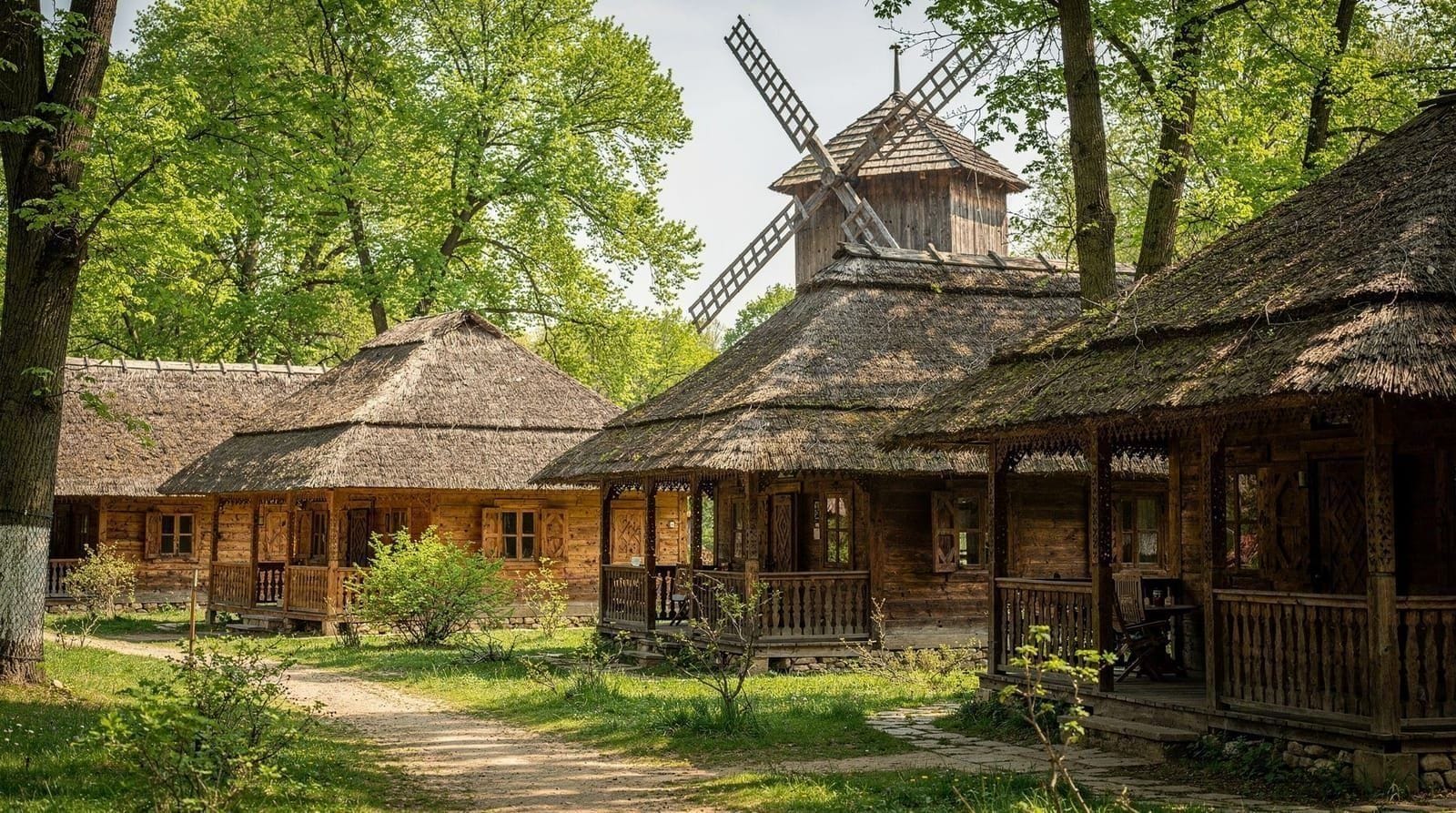
Cotroceni and Bucharest's hidden gems: the neighbourhoods tourists miss
Bucharest: Three neighborhood tour of dacia
What are Bucharest's best hidden gem neighbourhoods?
Cotroceni (for the presidential palace and inter-war architecture), Văcărești Natural Park (an urban wetland reserve in a communist unfinished project), Floreasca-Dorobanți (intact Belle Époque villa streets), and the Armeneasca-Eminescu area (creative district with small galleries and neighbourhood restaurants). None of these require more than a Metro ride to reach.
Most visitors to Bucharest see the Old Town, the Palace of Parliament, Calea Victoriei and Herăstrău Park. This is a reasonable introduction but it misses the parts of the city that Bucharesters are most attached to: the villa neighbourhoods with their century-old trees, the urban wetland that grew inside a communist engineering failure, the creative districts where galleries and neighbourhood restaurants have taken over inter-war apartment buildings. This guide covers these areas with enough specificity to navigate independently.
| Where | Cotroceni, Văcărești, Armeneasca-Eminescu, Floreasca-Dorobanți |
| Cost | Free to explore; Cotroceni Museum ~70 RON |
| Time needed | Half day per neighbourhood; a full day to combine two |
| Getting there | Metro to each area; Văcărești needs car or Bolt |
| Best time | Spring for villa streets; autumn for Văcărești birdlife |
Cotroceni: presidential palace and university neighbourhood
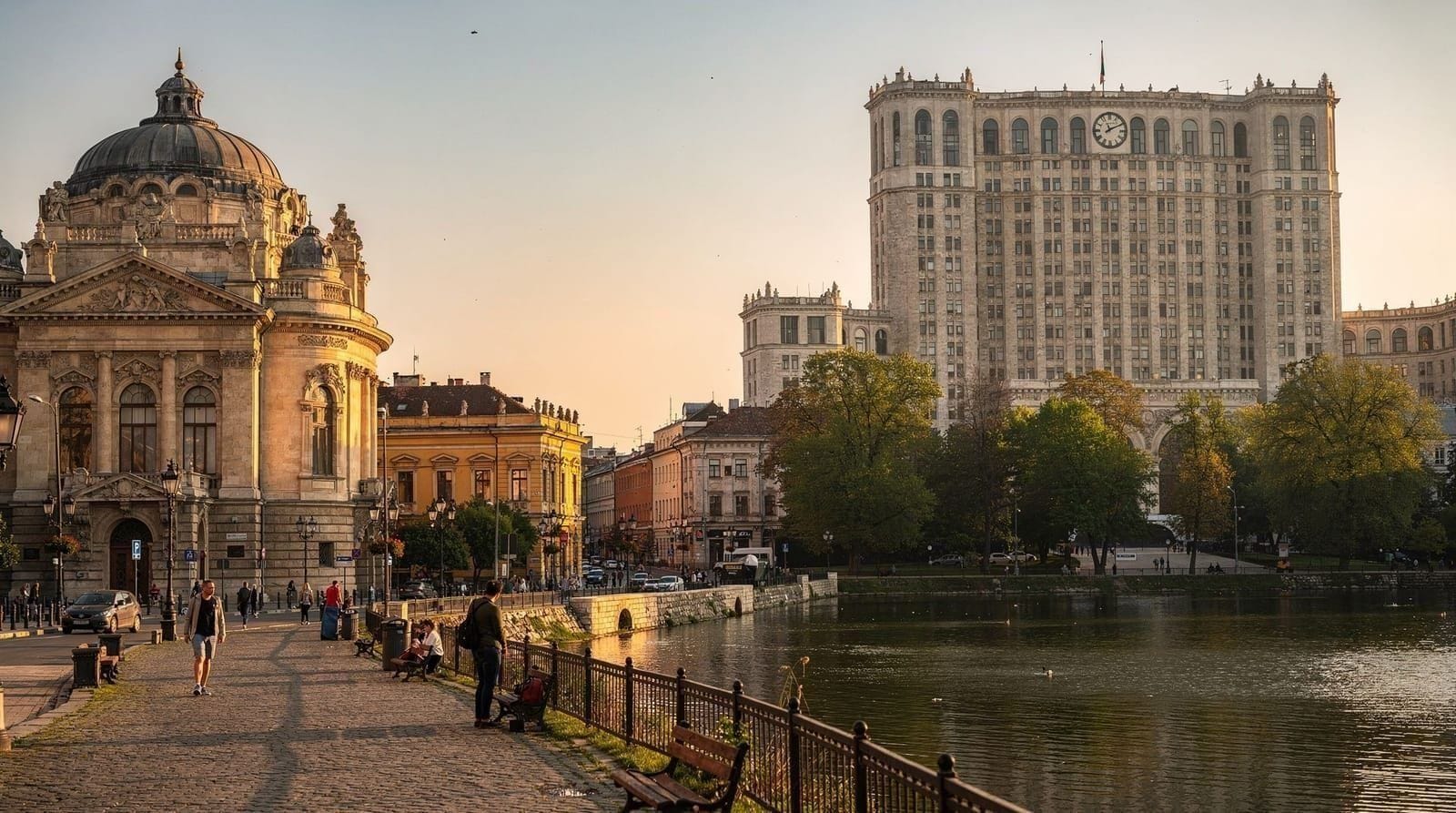
Cotroceni occupies the southwestern part of Bucharest, roughly 3 km from the Old Town, beyond the Dâmbovița River. It has historically been an aristocratic and royal neighbourhood — Queen Marie of Romania made Cotroceni Palace her primary residence in the early 20th century, and the area’s architectural character reflects that era.
Cotroceni Palace and Museum
The palace complex occupies the site of a 17th-century monastery founded by Constantin Brâncoveanu. The current neo-medieval structure was built in the 1890s for Crown Prince Ferdinand and Princess Marie. Today it serves as the official working residence of the Romanian President.
Visiting: The Cotroceni National Museum occupies a portion of the complex and is open for guided tours Tuesday–Sunday, 10:00–18:00 (reduced weekend programme, check the official site). Advance booking is strongly recommended — capacity is limited and popular dates fill quickly. The museum covers Romanian royal history with original furniture, artwork, textile collections and documentary photographs from the royal period.
The medieval portion of the original monastery (preserved within the palace complex) includes fragments of Brâncovenesc frescoes and the 17th-century crypt. Entry approximately 70 RON; guided tour required (individual walk-through not permitted).
The Cotroceni neighbourhood streets
Around the palace, the residential streets of Cotroceni have some of Bucharest’s best-preserved early 20th-century villa architecture. Strada Eroilor, Strada Panduri and the surrounding streets are lined with houses built between 1900–1940, mostly for academics, doctors and senior officials connected to the nearby University of Medicine and Pharmacy.
Unlike Dorobanți (which has been extensively converted to offices and embassies), Cotroceni remains primarily residential with active family life visible. The neighbourhood has one of the highest proportions of green space in central Bucharest — the streets feel notably different from the boulevards closer to the city centre.
Getting to Cotroceni: Metro to Eroilor (Line M3) or Politehnica (Line M3). Bus 368 and 136 also connect from the centre.
The Botanical Garden of the University of Bucharest sits a short walk from the Eroilor metro stop and makes a natural pairing with the palace visit — particularly for families, since the garden’s play areas and open lawns give children room to move after the more formal, guided-only palace tour. Spring and early summer bring the garden’s rose collection and greenhouse displays to their best.
Văcărești Natural Park: Bucharest’s urban wilderness
This is Bucharest’s most extraordinary hidden gem and one of the most unusual natural spaces in any European capital. At 183 hectares, the Văcărești natural park sits in a bowl of land in the southeastern part of the city — originally excavated in the 1980s to create a large artificial lake as part of Ceaușescu’s urban transformation plans.
The construction project was never completed. After 1989 the giant excavation was abandoned, the concrete channels silted up, and reed beds, willows and wetland vegetation colonised the site. By the 2000s it had become a significant bird habitat; it was formally designated a natural park in 2016.
What is here:
- Over 200 species of birds, including grey herons, great white egrets, cormorants, purple herons, night herons, marsh harriers and kingfishers
- Breeding populations of wild duck, moorhen and coot on the water
- Occasional visiting white-tailed eagles and osprey in autumn migration
- Fox and weasel populations visible at dawn
- A walking trail system around the perimeter (approximately 5 km)
Visiting: The park is free to enter. The main entrance is from Calea Văcărești; several unofficial access points exist through gaps in the perimeter fence. No visitor facilities inside. The Văcărești Visitor Centre (small, volunteer-run) occasionally operates at weekends for guided birdwatching walks.
Best time for birds: Dawn in spring (April–May) for breeding activity and maximum variety. Migration periods (September–October, March) for passage species. Summer is busiest for breeding herons; winter for wintering ducks.
Getting there: Tram 40 from Piața Unirii to Piața Văcărești, then 10 minutes’ walk. Metro to Dristor (Line M2), then a 20-minute walk. The area is not well-served by public transport; Bolt to the main entrance from the centre costs 15–20 RON.
The Armeneasca-Eminescu creative district
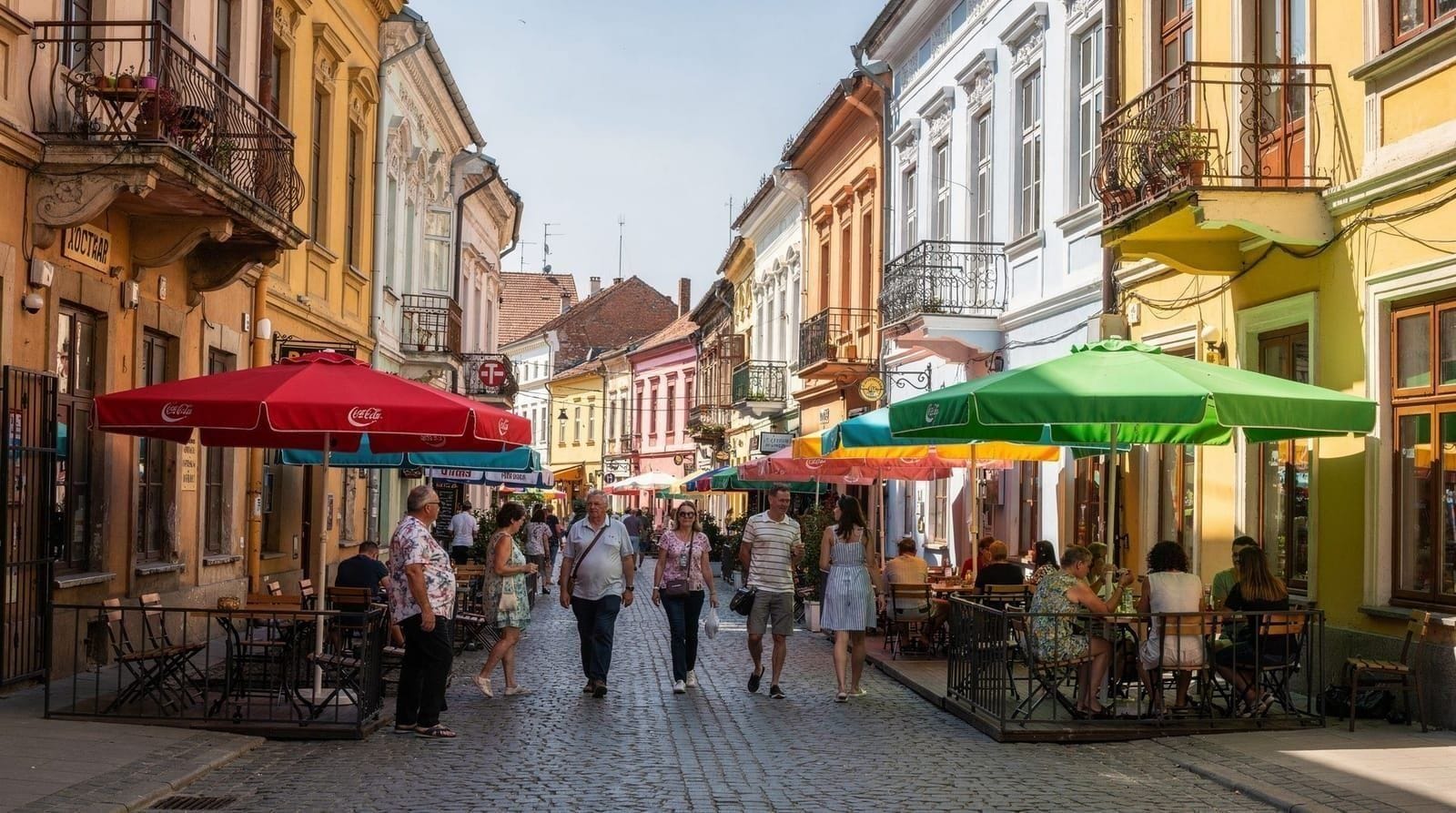
The streets around Strada Armenească and Strada Mihai Eminescu, north of Piața Universității, form Bucharest’s most vibrant creative neighbourhood. The area developed its current character in the 2010s as galleries, independent cafes, small theatres and natural wine bars took over ground-floor spaces in pre-war apartment buildings.
Key addresses:
Galeria Posibilă (Strada Arthur Verona) — One of the best contemporary art galleries in Bucharest, showing Romanian and international artists. Free entry to most exhibitions. Open Tuesday–Saturday 11:00–19:00.
Lahovari Wine Bar (Piața Lahovari 1) — Already mentioned in the food and nightlife guides, worth reiterating here as a neighbourhood institution. Natural wine, cheese boards, a regular roster of local musicians on weekend evenings.
Librăria Humanitas (Strada Franceză 12, also at Piața Romană) — The best Romanian bookshop chain, with strong architecture, art and history sections. The Piața Romană branch has an attached café.
Café Verona (Strada Arthur Verona 13) — The neighbourhood café, in a small courtyard. Coffee 12–16 RON; lunch options around 40–60 RON.
Sunday flea market at Piața Lahovari: Every Sunday morning, informal stalls appear around the square selling vintage items, books and collectibles. Not a formal market but consistent enough to plan around. 09:00–14:00.
The Floreasca-Dorobanți villa district
North of the city centre, between Calea Dorobanților and the Floreasca lake, the streets of Dorobanți and Floreasca preserve a remarkable concentration of inter-war villas. This was Bucharest’s residential high ground before 1948 — home to industrialists, intellectuals, diplomats and senior officials.
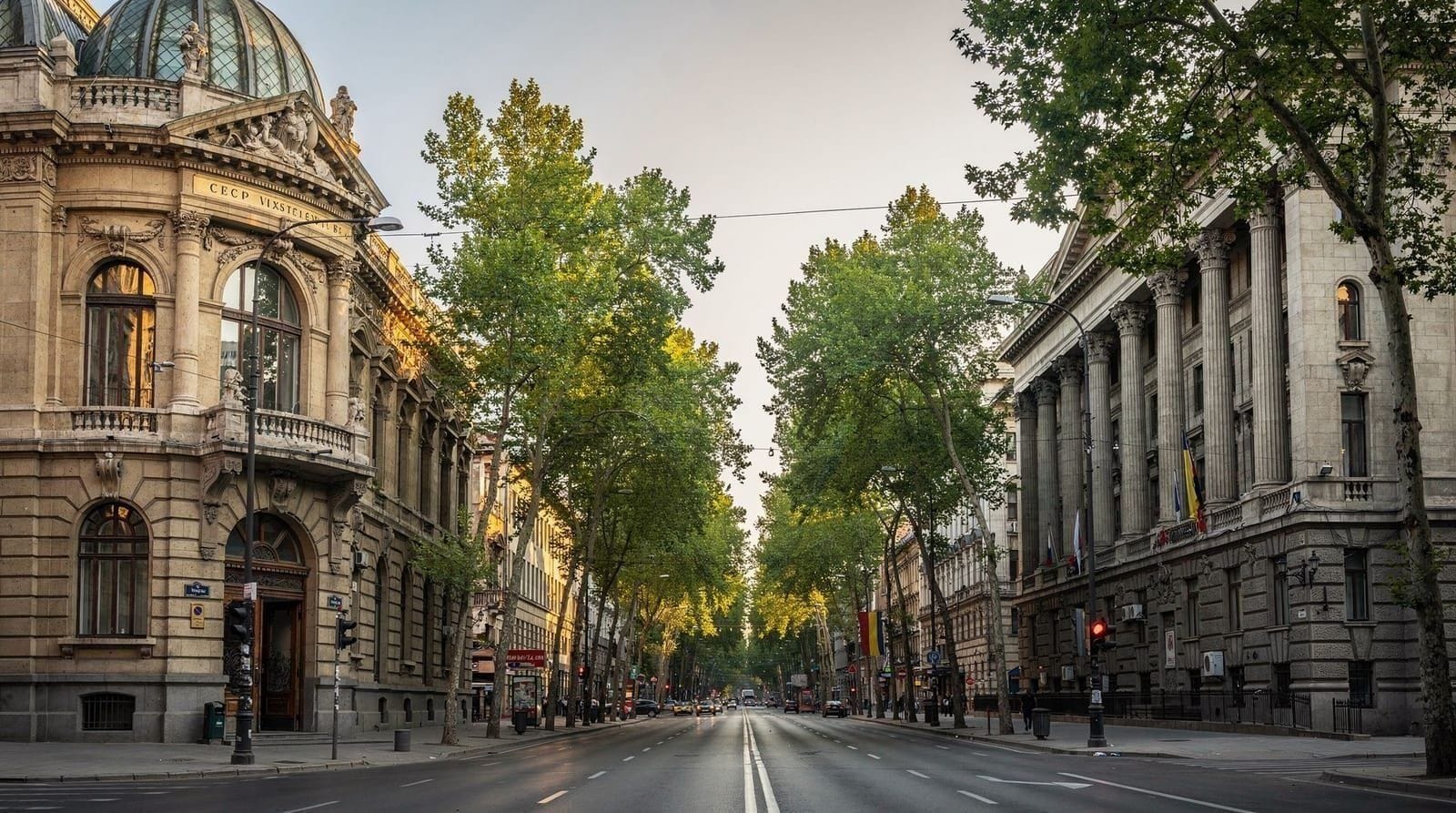
Strada Lascăr Catargiu and the perpendicular streets running east from Calea Dorobanților contain some of the most impressive individual houses in Bucharest, ranging from Eclectic to Art Deco to Modernist. Many have been restored by their post-1990 owners; several now serve as boutique hotels or embassy residences.
Strada Tache Ionescu and surroundings: A slightly more residential character, with mature trees providing canopy over narrow streets. The neighbourhood garden restaurant culture concentrates here — small tables spill onto the pavements in summer.
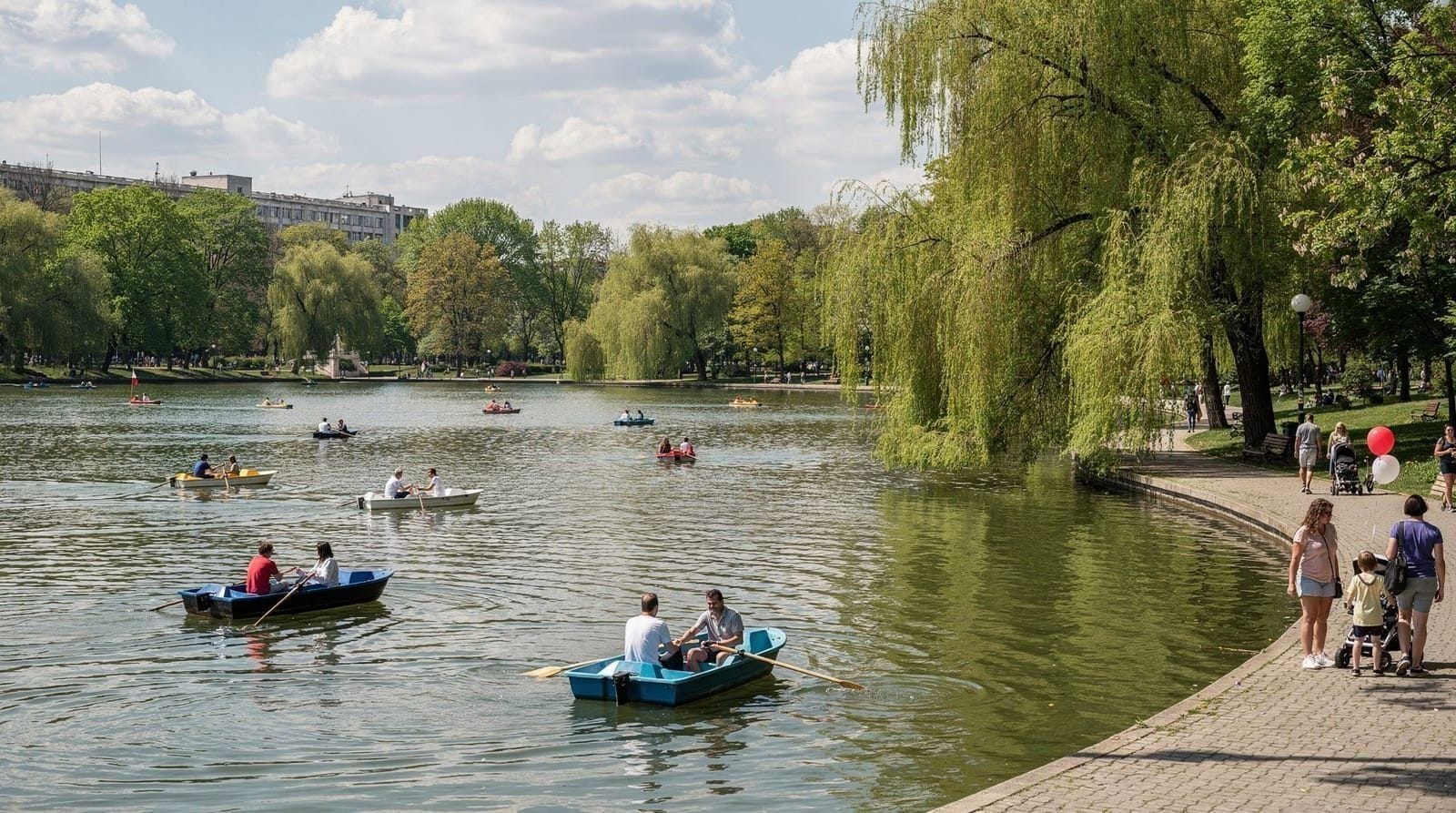
The Floreasca lake itself (smaller than Herăstrău, more neighbourhood-oriented) has a strip of outdoor bars on its eastern shore that are markedly less tourist-focused than the Herăstrău equivalents.
Discovering Bucharest by vintage car or alternative walking tour
Some of these neighbourhood gems are difficult to understand without context — why this building survived when the one next to it did not, what the street looked like in 1930, who lived in a particular villa and what happened to them. Guided tours fill this gap efficiently.
Three neighbourhood tour of Bucharest in a Dacia vintage car — A private tour in a communist-era Dacia automobile, covering three contrasting Bucharest neighbourhoods with a local guide who provides historical and architectural context. Approximately 2 hours, 150–200 RON per person. The vehicle itself is part of the experience.
Alternative walking tour of Bucharest — A 2.5-hour tour focused on the parts of Bucharest that mainstream tours miss: courtyards, passageways, small churches, neighbourhood markets and the surviving fragments of pre-communist Bucharest. Good for visitors who have already done the standard itinerary.
Hidden gems walking tour — A 2.5-hour walking tour through the smaller streets of the Old Town and adjacent neighbourhoods, with emphasis on architecture that survived the communist demolitions.
Practical notes for neighbourhood exploration
Getting lost is fine: Bucharest’s neighbourhoods are compact enough that being lost means finding something unexpected rather than being in danger. The city is very safe to walk in during daylight hours.
Language: English is understood in the cafes and galleries of the creative districts. In outer residential areas and at the Văcărești park, Romanian (or a translation app) is more useful.
Transport: The Metro covers most of these areas, with the exception of Văcărești (car or Bolt most practical). The network map is available at all stations. Bolt and Uber both operate reliably throughout Bucharest and are the easiest fallback if a metro connection would otherwise require two changes.
Best season: Spring (April–June) for the Floreasca and Cotroceni villa streets — the gardens are in bloom and the light is good for photography. Autumn (September–October) for Văcărești wetland (migration birds) and the villa district foliage. Winter is quieter everywhere but some neighbourhood cafes and galleries are closed reduced hours.
For a broader overview of Bucharest’s neighbourhoods and how to divide your time, the Bucharest itinerary guide covers the logistics. For the Old Town itself, the Old Town guide provides context for how these hidden areas relate to the tourist centre. The Herăstrău Park guide covers the northern neighbourhood in more detail.
Best season to visit each neighbourhood
Each area rewards a different time of year, and planning around this makes a real difference to what you see.
| Neighbourhood | Best season | Why |
|---|---|---|
| Cotroceni | Spring (Apr–Jun) | Villa gardens in bloom; comfortable walking weather |
| Văcărești Natural Park | Spring (breeding) or autumn (migration) | Peak bird activity at dawn |
| Armeneasca-Eminescu | Year-round | Indoor galleries and cafés work in any season |
| Floreasca-Dorobanți | Spring or autumn | Mature street trees at their best; summer terraces busy |
Combining the hidden gems with the standard sights
None of these neighbourhoods need to replace the classic Bucharest itinerary — they work best as an addition. If you have already covered the Village Museum in Herăstrău, the Floreasca-Dorobanți villa streets are a natural extension on foot or by short taxi, since both sit in the northern half of the city. Visitors basing their trip around Calea Victoriei can reach Cotroceni in under 20 minutes by metro, making it an easy half-day detour from the main boulevard.
Building these neighbourhoods into a wider trip
Hidden Bucharest works best when it is set against the rest of the city. If you are still deciding how long to stay, the how many days in Bucharest guide helps you judge whether a day for the quieter districts fits your trip. The Bucharest in 3 days itinerary and the Bucharest in 2 days itinerary show how the classic sights stack up, and where a neighbourhood morning can replace a more crowded stop.
Where you sleep changes how easy these areas are to reach, so the where to stay in Bucharest guide is worth a look before you book. Since most of these districts hang off the metro network, the Bucharest metro guide explains how to get around without relying on taxis, and the taxi scams guide is useful reading for the moments when you do need one, for instance on the way out to Văcărești.
The creative district around Armeneasca pairs naturally with an evening out: the best bars and clubs in Bucharest and the where to eat in Bucharest guide cover the next step once the galleries and cafés close. For more context on the city’s layered history, which explains why so many of these villas and streets survived, see the communist Bucharest tour guide and the Bucharest travel guide for first-timers. Visitors who like this side of the city may also enjoy the hidden gems of Bucharest blog post.
Frequently asked questions about Cotroceni and hidden Bucharest
Is it worth visiting Cotroceni Palace even if you’re not interested in Romanian royal history?
Yes, for the architecture. The palace complex is the most complete example of neo-medieval architecture in Bucharest, and the Brâncovenesc monastery fragment inside is one of the few intact examples of this 17th-century Romanian architectural style. Even without particular interest in the historical content, the spaces are impressive.
How crowded is Văcărești Natural Park?
Very uncrowded by Bucharest park standards. Most Bucharesters are unaware it exists as a wildlife destination. On a weekday morning you may have the park entirely to yourself. This is one of the most genuinely off-the-beaten-path experiences available in Bucharest.
What camera equipment do I need for birdwatching at Văcărești?
Binoculars are sufficient for the herons, egrets and cormorants that nest in the reed beds close to the path. For smaller birds and raptors, a telephoto lens (300mm+ on a crop sensor, 500mm on full frame) gives significantly better results. The park’s heron colony is visible with the naked eye at dawn from the perimeter path.
Are there children’s activities in the Cotroceni area?
The Cotroceni Museum itself is better suited to adults and older children (12+). However, the neighbourhood streets and the nearby Botanical Garden (Grădina Botanică, 10 minutes’ walk from the Metro) provide an excellent outdoor destination for families. The Botanical Garden has good play areas and café facilities.
What is the best hidden gem restaurant in the creative district?
Bistro Ceva Bun (Strada Văcărești 52) is consistently recommended by locals. Small tables, changing blackboard menu, very good ciorba and fresh bread. Lunch only on weekdays. No tourist clientele, no English menu — but the food genuinely represents Bucharest cooking at its best without the price premium of the more famous restaurants.
Top experiences
Bookable activities with verified prices and instant confirmation on GetYourGuide.