Communist Bucharest tour — full-day and half-day options honestly reviewed
Bucharest: Full day behind the wall Bucharest tour
Duration: 1 day
Bucharest has more to say about communist history than almost any other city in Eastern Europe. The regime reshaped a fifth of the city’s surface area, demolished thousands of historic buildings, and ended with the only violent revolution in the Eastern Bloc in 1989. A well-run communist tour does not just show you big grey buildings — it explains how 40 years of one-party rule changed the physical fabric, daily life, and collective memory of a city of two million people.
| Where | Civic Centre, Palace of Parliament, Primăverii, Piața Revoluției |
| Time needed | 3 hours (walking) up to 8–10 hours (full day) |
| Cost | Around 150–500 RON per person depending on format |
| Included | Varies — check whether Palace of Parliament entry is bundled |
| Best time | Any season; interiors are indoor, exteriors best in daylight |
What the full-day tour covers
Full-day communist Bucharest tours (8–10 hours) are the most complete option on the market. A typical itinerary covers:
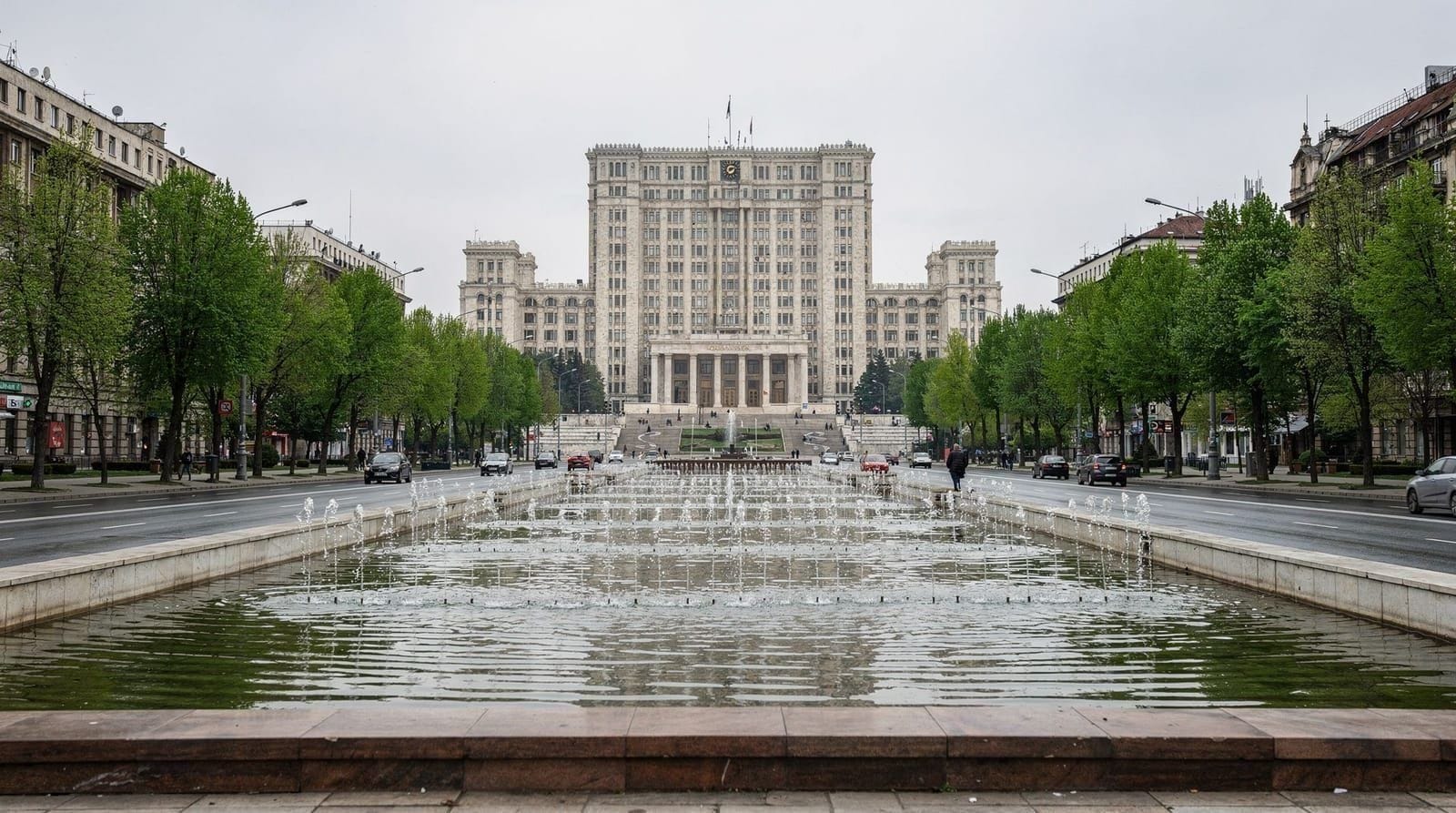
The Civic Centre and Bulevardul Unirii — Ceaușescu’s attempt to create a Pyongyang-style monumental axis through central Bucharest in the 1980s. Around 40,000 people were displaced, and an estimated 26% of Bucharest’s historic urban fabric was demolished to create it. The boulevard is 3.5 km long and modelled — by Ceaușescu’s explicit instruction — to be slightly longer than the Champs-Élysées.
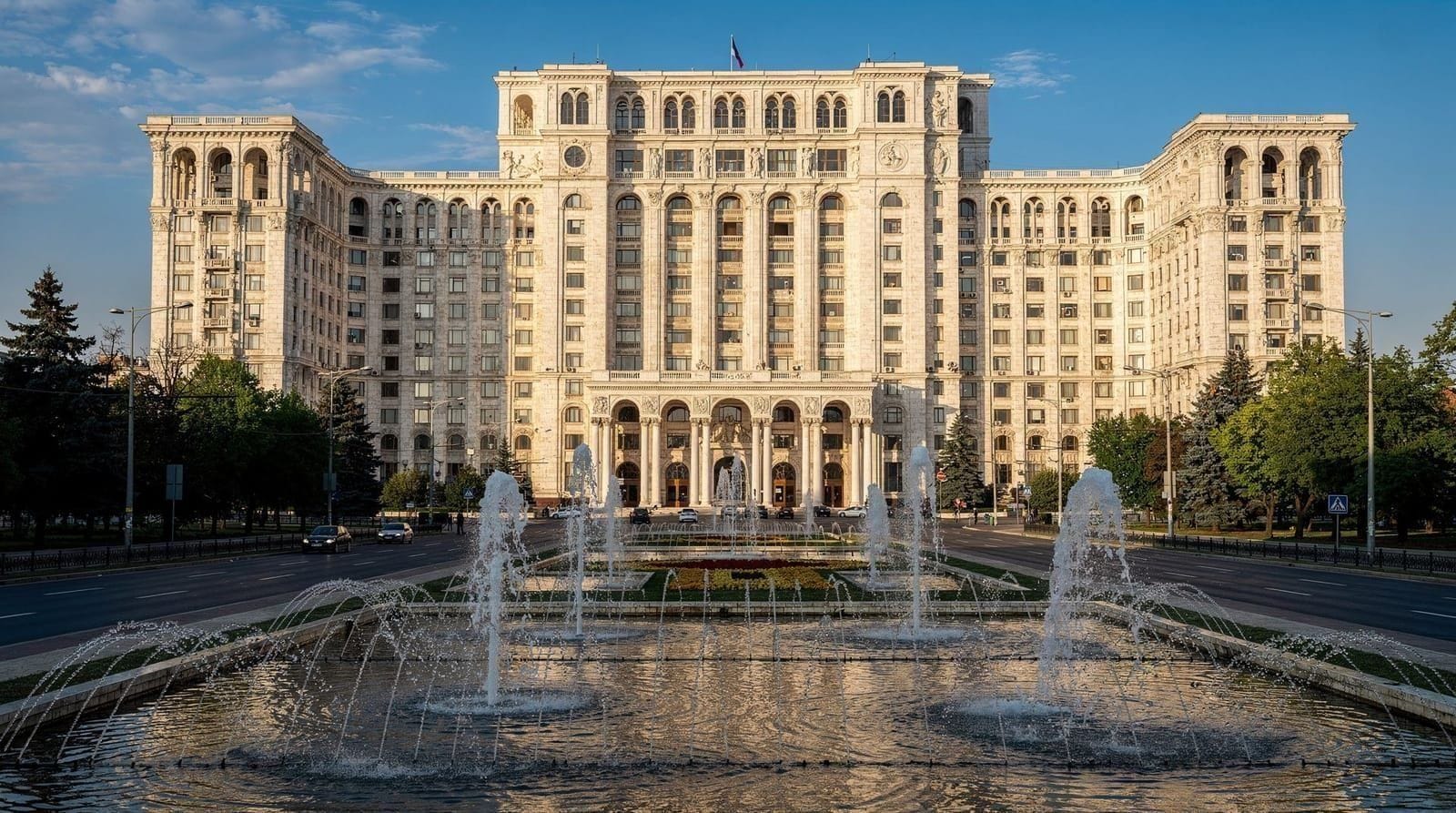
Palace of Parliament — exterior overview or interior visit depending on the tour. Full-day tours typically include the guided interior tour. See our dedicated Palace of Parliament tour review for detailed ticket information.
Primăverii Palace (Ceaușescu’s residence) — one of the most interesting stops. The Spring Palace was the Ceaușescu family’s primary Bucharest home from 1965 to 1989. It is now a museum, and access is only by pre-booked tour or guide. The interior reveals the contradictions of the regime: austere in public pronouncement, privately decorated with Western consumer goods and luxury finishes.
1989 revolution sites — the Central Committee building balcony from which Ceaușescu gave his final speech on 21 December 1989, the Intercontinental Hotel which served as a broadcast centre, and Piața Revoluției where the first shots were fired. Good guides contextualise the chaotic, still-contested events of those four days. See also the 1989 revolution sites guide for detailed history.
Museum of Communism — a private museum on Calea Victoriei that documents daily life through objects, personal testimonies, and archival footage. Better at human-scale stories than the Palace of Parliament. See the museum guide for what to expect.
Full-day communist Bucharest tour with Ceaușescu residenceHalf-day and 3-hour options
If full days are not realistic, the 3-hour communist walking tour is a worthwhile introduction. It covers the Civic Centre and revolution sites on foot, giving enough context for the architecture to make sense. It does not include the Primăverii Palace or Museum of Communism.
The 3-hour tour suits travellers who plan to visit the Palace of Parliament and Museum of Communism independently on the same day, or who are in Bucharest for only one day and want to split time across multiple experiences.
3-hour communist Bucharest walking tourPrivate communism tours
Private 6-hour tours with a specialist guide (150–250 RON / 30–50 EUR per person depending on group size) are the best option for travellers with a serious interest in modern Romanian history. They allow deeper Q&A, can be customised to include the Ceaușescu execution site at Târgoviște if you have a full day, and move at your pace rather than a group’s.
Private 6-hour communist tour with Ceaușescu mansionPrices in RON and EUR (2026)
- 3-hour shared walking tour: 150–200 RON (30–40 EUR) per person
- Half-day bus tour (4–5 hours): 200–280 RON (40–55 EUR) per person
- Full-day tour with all sites: 350–500 RON (70–100 EUR) per person (often includes Palace of Parliament entry and Museum of Communism ticket)
- Private 6-hour tour: 600–1,200 RON (120–240 EUR) per person depending on group size
Note: the Primăverii Palace charges a separate entry fee of around 35 RON (7 EUR). Not all tours include this.
Honest assessment: which version to choose?
For most visitors with one full day, the full-day shared tour gives the best bang for money. The combination of walking, van transport, and multiple interior sites is tiring but rarely boring.
The 3-hour option is fine as a complement to self-guided visits to the Palace of Parliament and the Museum of Communism — but if you are going to do three separate bookings anyway, the full-day tour is more efficient and often cheaper in total.
Private tours are worth the premium for history enthusiasts, journalists, or researchers. The best guides bring personal family connections to the communist era and can draw on oral history that no textbook contains.
Avoid tours that claim to cover the full communist Bucharest narrative in under 90 minutes — the Civic Centre alone takes 30 minutes to properly understand, and rushing the 1989 sites reduces them to photo stops.
Pairing with other Bucharest content
The Ceaușescu’s Bucharest guide on this site gives deep background before your tour. The first-time Bucharest guide covers how to pace this alongside other city sights. If you are building a multi-day itinerary, the Bucharest itinerary guide has day-by-day suggestions that position the communist tour on Day 2 of a 3-day visit.
The Civic Centre in detail
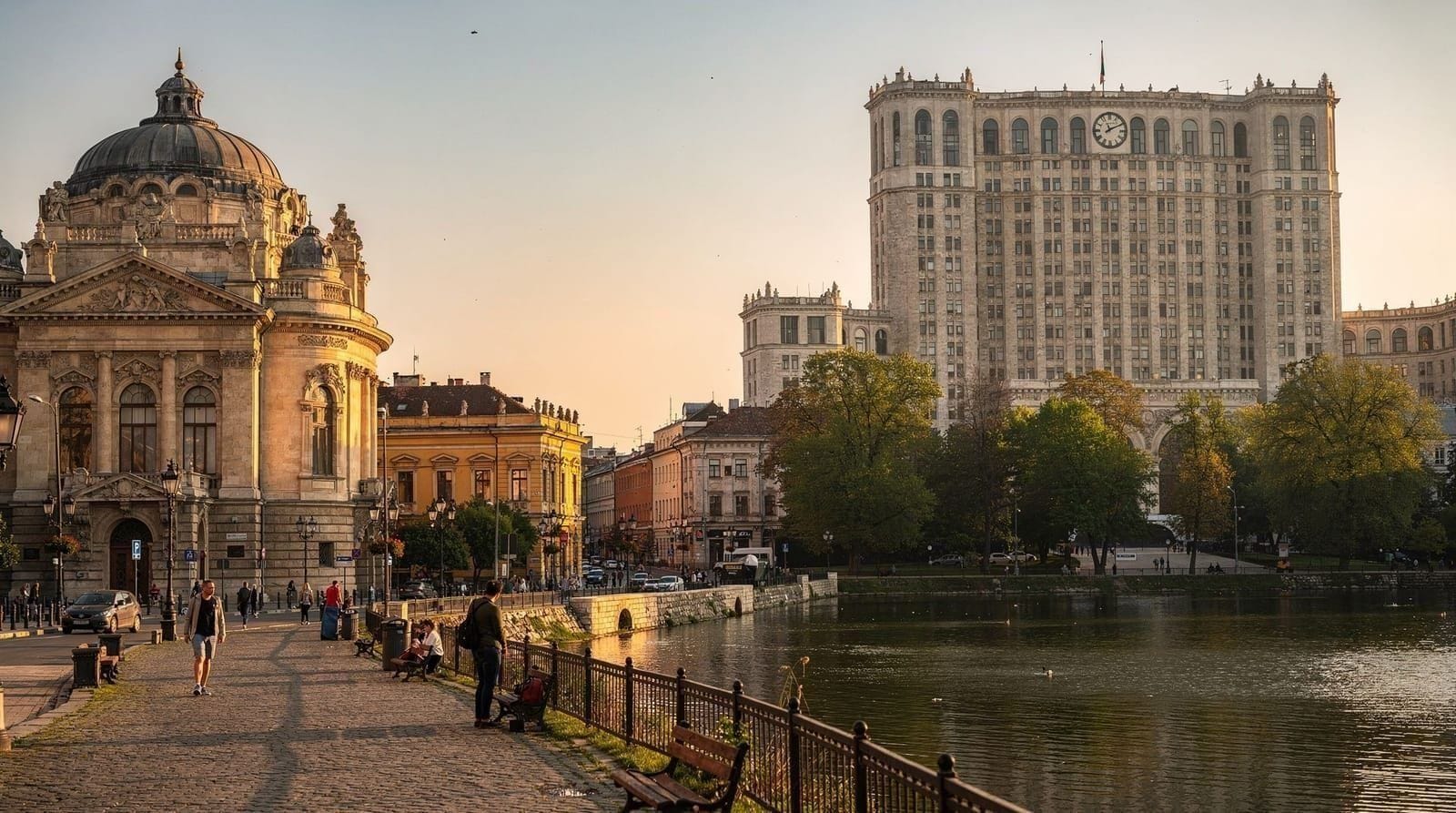
Bulevardul Unirii is the physical centrepiece of Ceaușescu’s attempt to build a new Bucharest. Construction began in 1984 after a major earthquake in 1977 gave Ceaușescu the political justification to authorise wholesale demolition of the historic centre. The boulevard runs 3.5 km from the Piața Unirii fountains to the Casa Poporului (now the Palace of Parliament), flanked by ten-storey apartment blocks with mandatory neoclassical facades — columns, pilasters, decorative friezes applied to what are essentially concrete panel buildings.
The proportions were designed to impress from a moving vehicle rather than from street level. Walking the boulevard, the scale becomes oppressive: the carriageway is 120m wide (wider than the Champs-Élysées), but the buildings lining it are set so far back and topped by nothing of genuine architectural interest that the effect is of engineered grandeur that does not quite work. The Unirii fountains — a long chain of water features running down the central reservation — were added in the 1980s and are still maintained. On summer evenings they are illuminated and draw Bucharest residents for evening walks, which gives the boulevard an oddly functional atmosphere despite its history.
The cross-axis that Ceaușescu envisaged — a north–south boulevard intersecting Unirii at 90 degrees — was never completed. The ghost of it survives in the urban planning: there are oversized junctions leading nowhere, and demolished buildings were never replaced. The Casa Poporului itself anchors the western end of Unirii. Its scale is genuinely staggering: 12 storeys above ground, 8 below, 1,100 rooms, 3,100 windows. By floor area it is the second-largest administrative building in the world after the Pentagon. Tours cover a fraction of the interior; most of the building remains unused or is allocated to Romanian parliamentary offices.
The 1989 revolution sites in depth
The Romanian Revolution of December 1989 was the only violent overthrow in the Eastern Bloc that year. It began not in Bucharest but in Timișoara on 16 December, when protests against the forced relocation of a Hungarian-Romanian pastor escalated into open demonstrations against the regime. By 21 December, Ceaușescu had returned from an official visit to Iran and decided to hold a mass rally in Bucharest — a standard tool for demonstrating popular support.
The rally took place in the square in front of the Central Committee building on Calea Victoriei. Ceaușescu spoke from the balcony — the same balcony visible today from the square, now named Piața Revoluției. In live broadcast footage that was subsequently seen across Romania, the crowd turned on him. Booing and shouting began at the rear of the crowd and spread forward. Ceaușescu’s face on national television showed visible confusion and then panic before the broadcast cut out. This moment — broadcast live and then cut — was the beginning of the end.
Over the following 48 hours: the Intercontinental Hotel on Bulevardul Nicolae Bălcescu served as a de facto command centre and shelter for journalists and some revolution figures, given its elevation above the surrounding streets and its glass-tower visibility. The TVR building (Romanian Television) on Calea Dorobanților was seized by revolutionaries on the evening of 22 December and became the symbolic command centre of the revolution — the footage broadcast from there of crowds celebrating, confused official statements, and eventually Ceaușescu’s capture was seen across the country.
Ceaușescu and Elena fled by helicopter from the roof of the Central Committee building on the afternoon of 22 December as crowds stormed the entrance below. They were arrested the same day near Târgoviște, 80 km northwest of Bucharest. A rapid military tribunal was convened on 25 December 1989. Both were convicted of genocide and economic crimes and executed by firing squad at the Târgoviște military barracks later that day. The execution was filmed and the footage broadcast nationally within hours.
Good communist tour guides spend considerable time at Piața Revoluției explaining the contested history — who fired first, who the mysterious snipers were, how the post-revolution government came to power — without pretending the history is resolved. The honest answer is that some aspects of December 1989 in Bucharest remain genuinely unclear.
A note on the Museum of Communism
The Museum of Communism (Muzeul Comunismului) on Calea Victoriei is a private museum that takes a fundamentally different approach from the Palace of Parliament — it focuses on daily life rather than state architecture, and it succeeds on its own terms.
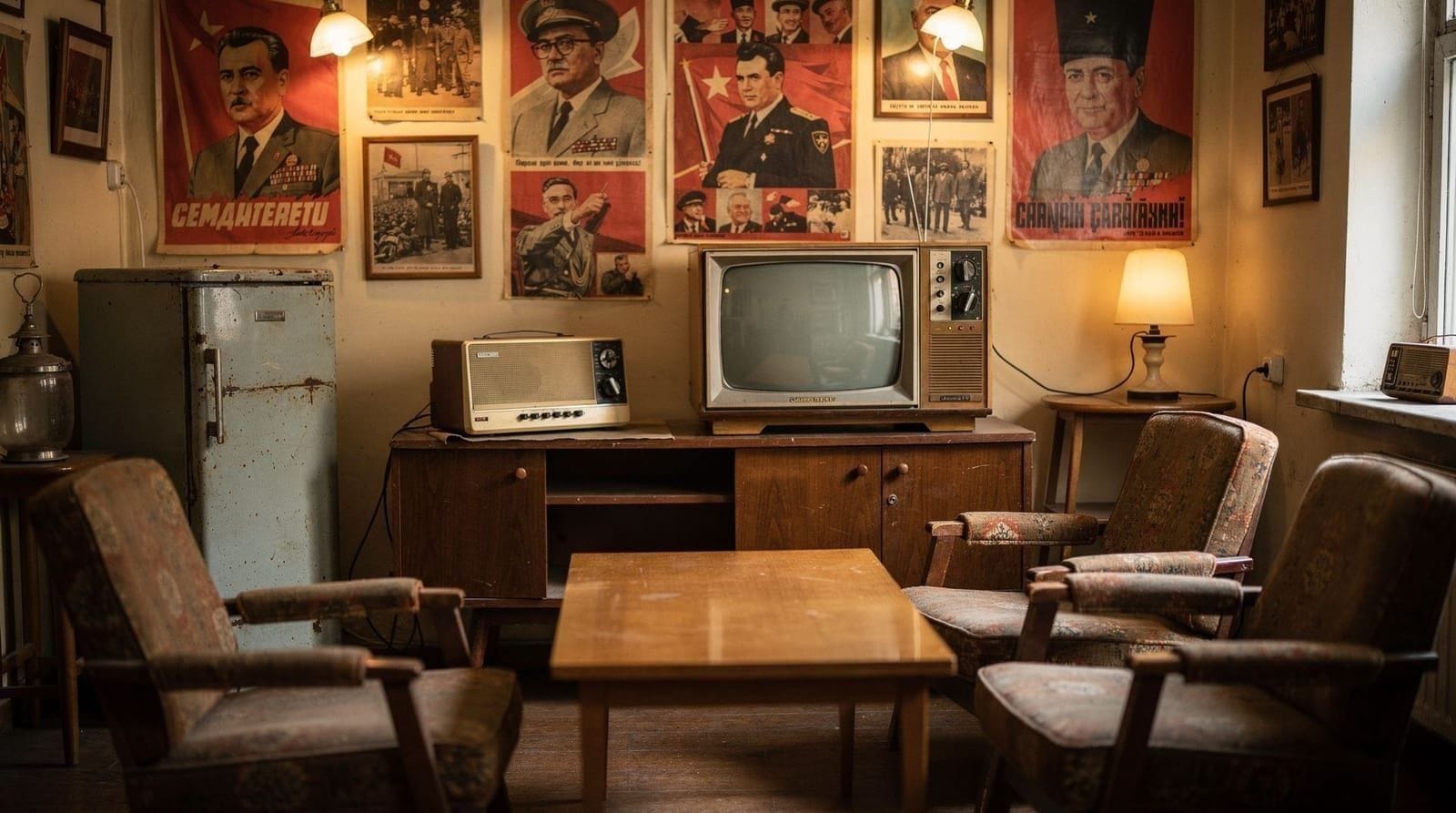
The collection documents how ordinary Romanians lived under the communist system: food rationing books from the 1980s when Ceaușescu was exporting food to pay foreign debts while the population queued for basics; the specific brands of communist-era goods (Dacia soap, Brifcor margarine, the packaging of state-produced tinned goods); propaganda posters and schoolbooks; the queue tickets used for rationed staples. There is a reconstructed kitchen of the 1980s that is more unsettling than any grand gesture about state power.
The museum also covers political repression, the Securitate (the secret police), the system of informants, and the forced industrialisation that displaced rural populations. Testimonies from survivors run on video screens throughout.
Practical details: entry costs approximately 30–45 RON (6–9 EUR). Opening hours are typically 10:00–18:00 Tuesday through Sunday; confirm before visiting as hours change seasonally. The museum is small enough to complete in 1–1.5 hours. It is located near Piața Victoriei, about 15 minutes’ walk from the Civic Centre or a short taxi ride. This museum pairs well with the communist walking tour — do the tour in the morning, the museum in the afternoon.
Comparing the tour formats
| Format | Duration | Covers Primăverii Palace | Covers Museum of Communism | Best for |
|---|---|---|---|---|
| 3-hour walking tour | 3h | No | No | Splitting time across multiple bookings |
| Half-day bus tour | 4–5h | Sometimes | No | A middle-ground option |
| Full-day tour | 8–10h | Yes | Usually | Most first-time visitors with one day |
| Private 6-hour tour | 6h | Yes | Optional | History enthusiasts and researchers |
What survived the demolitions
Not every trace of pre-communist Bucharest near the Civic Centre was erased. A handful of buildings were physically relocated rather than demolished, using a Romanian engineering technique developed specifically for the project: entire multi-storey structures were placed on rail tracks and moved, intact, to new locations several hundred metres away, to preserve them while clearing the demolition corridor.
The most visible survivor is the Mihai Vodă Monastery bell tower, moved roughly 289 metres and now sitting somewhat incongruously behind later apartment blocks — a guide who knows to point it out turns what looks like an odd leftover structure into one of the more remarkable footnotes of the whole project. A handful of churches, including some Orthodox churches slated for demolition, were saved through similar relocation efforts led by engineer Eugeniu Iordăchescu, sometimes hidden from view by newly built apartment blocks specifically so the regime’s Civic Centre sightlines would not be interrupted by a religious building.
Where the tour fits in a longer trip
For visitors spending 3+ days in Bucharest, the Bucharest itinerary guide suggests running the communist tour on day two, after an old-town orientation day and before a day trip to Transylvania or the Danube Delta. This sequencing means the physical contrast between Ceaușescu’s Civic Centre and the older Lipscani streets is still fresh, which makes the guide’s explanation of what was demolished to build the boulevard land harder.
Travellers focused specifically on the 1989 revolution rather than the broader communist period should prioritise the 1989 revolution sites guide and consider a private guide who can spend more time at Piața Revoluției — the standard full-day itinerary allocates only 20–30 minutes there, which is not enough for the more contested aspects of the story.
Frequently asked questions about the communist Bucharest tour
What do communist Bucharest tours actually cover?
Standard tours visit the Civic Centre, the Palace of Parliament, Ceaușescu’s former residence in Primăverii, and key 1989 revolution sites. Full-day versions add the Museum of Communism and sometimes Snagov.
Is a communist tour different from a Palace of Parliament tour?
Yes — significantly. The communist tour gives broader context: urban transformation, the Ceaușescu family’s private life, the 1989 revolution. The Palace of Parliament is one stop within a communist tour.
How long is a full-day communist tour?
Full-day tours run 8–10 hours and include Palace of Parliament entry, the Ceaușescu mansion, the Civic Centre, and 1989 sites.
What does Ceaușescu’s house look like inside?
Surprisingly revealing — a mix of austere socialist furnishings and Western luxury goods. The Spring Palace has been open to the public since 2016 and is only accessible via pre-booked tour.
Is the communist tour appropriate for children?
Older children (12+) generally find it engaging. Younger children tend to disengage after the first hour.
Are there private communist tours in English?
Yes — several operators offer 3- to 6-hour private English-language tours with specialist guides.