Danube Delta tour from Bucharest — day trips and 2-day options reviewed
Bucharest: Day trip to Danube delta
The Danube Delta is one of Europe’s last great wildernesses — 5,800 square kilometres of reed beds, floating islands, and interlinked channels where the Danube spreads into the Black Sea. It is also 280 km from Bucharest, which means the day-trip logistics are genuinely challenging and the experience compressed. This review is honest about what a day trip delivers and when you need more time.
| Where | Danube Delta, via Tulcea — 280 km from Bucharest |
| Time needed | 15–16 hours (day trip) or 2 days (recommended) |
| Cost | Around 350–500 RON/person (day) or 700–1,100 RON (2-day) |
| Getting there | Minivan/coach from Bucharest, or train to Tulcea |
| Best time | April–June for birdwatching; September–October for comfort |
What the Danube Delta actually is
The delta forms where the Danube splits into three main channels — the Chilia (the northernmost and longest), the Sulina (the only navigable channel for large ships), and the Sfântu Gheorghe (the most scenic for small boats). Between them, a labyrinth of secondary channels, lakes, and reed beds covers an area larger than Luxembourg.
It is a UNESCO World Heritage site and one of the most important wetland ecosystems in the world. The bird list exceeds 300 species. The white pelican colony at Rosca-Buhaiova is the largest in Europe. The delta also contains Europe’s last remaining wild populations of certain sturgeon species, though numbers have declined drastically from 20th-century overfishing.
The human settlements in the delta — Crișan, Mila 23, Sulina, Sfântu Gheorghe — are boat-dependent villages that function as they have for centuries. Sulina is the easternmost city in Romania (at the mouth of the Sulina channel, 84 km from Tulcea) and has a melancholy end-of-the-road quality that is genuinely distinctive.
Day trip: what you realistically get
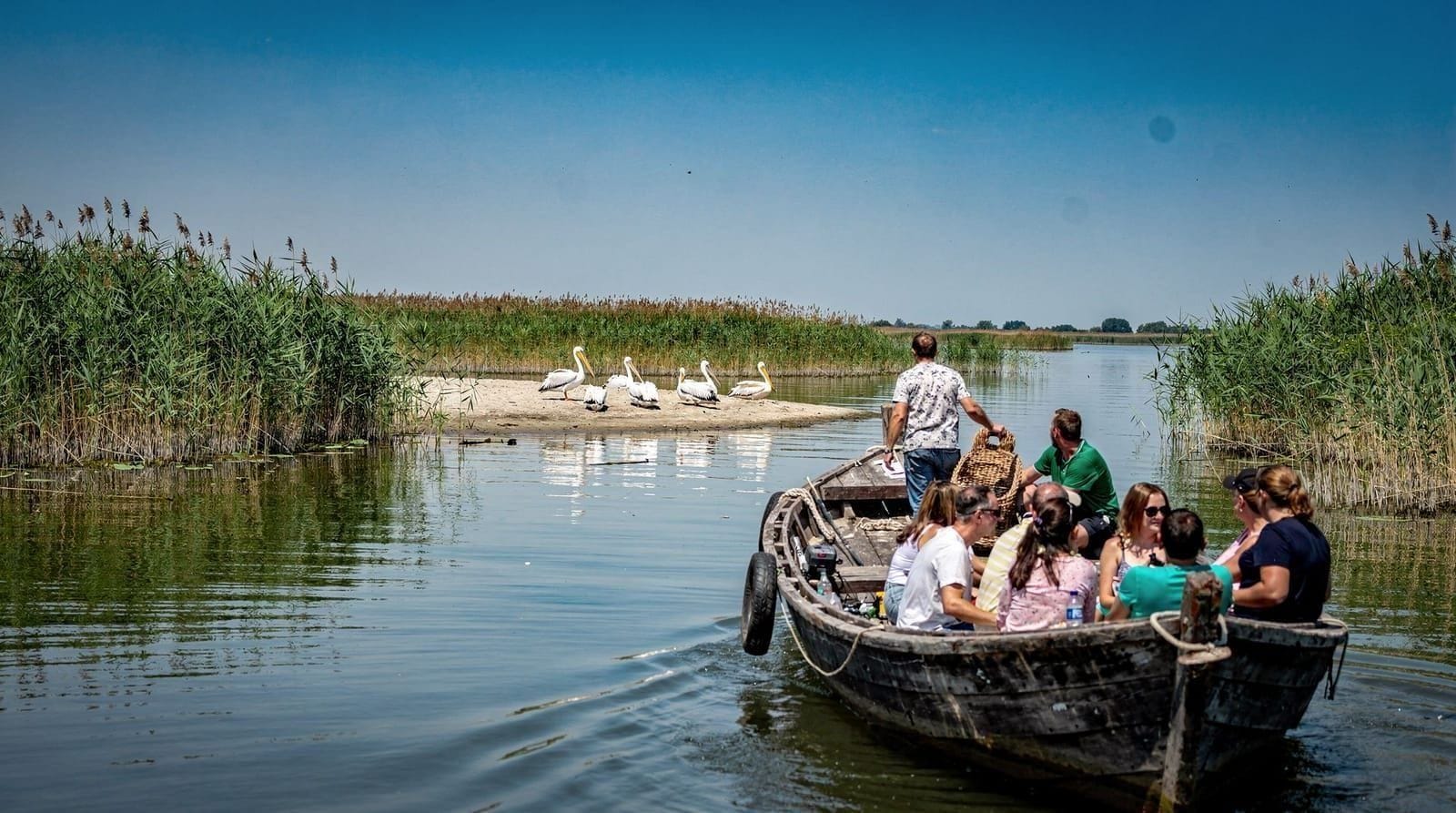
Day tours from Bucharest leave at 5:30–6:30 to arrive in Tulcea around 10:00–11:00. A boat excursion of 2–4 hours covers the main accessible channels near Tulcea — enough to see pelicans, herons, and typical reed-bed vegetation. Return to Bucharest around 21:00–22:00.
This is a very long day (15–16 hours total) for a 3–4 hour delta experience. The wildlife is real and impressive, but the accessible channels near Tulcea are also the most trafficked — tourist boats are common, and the sense of wilderness is diminished compared to the remote interior.
Danube Delta day trip from Bucharest Danube Delta day tour — alternative operatorPrices for day tours: 350–500 RON (70–100 EUR) per person including transport and boat excursion. Some include a traditional fish lunch at a delta guesthouse; check before booking.
The 2-day tour: a much better option
The 2-day Danube Delta tour is one of the most distinctive experiences available from Bucharest and genuinely worth the extra cost and time. The itinerary typically works as follows:
Day 1: Bucharest to Tulcea by minivan (3.5–4 hours), boat transfer to guesthouse in Crișan or Mila 23, afternoon boat excursion into the main delta channels, dinner at the guesthouse (fish soup, grilled carp or catfish, local wine), overnight in the delta.
Day 2: Dawn on the water (this is what separates 2-day from day trips — sunrise over the delta in stillness before tourist boats arrive), full-day excursion into secondary channels and lakes, afternoon return to Bucharest arriving around 20:00.
2-day Danube Delta wonders tour from Bucharest Danube Delta 2-day tour — alternative 2-day optionPrices for 2-day tours: 700–1,100 RON (140–220 EUR) per person including transport, accommodation, and boat excursions (check whether meals are included).
Independent travel to the Danube Delta
The most rewarding way to experience the delta independently: train from Bucharest Gara de Nord to Tulcea (twice daily, 3.5–4 hours, ~65–90 RON / 13–18 EUR), then book a local boat guide in Tulcea for a day on the water (250–400 RON / 50–80 EUR for a private boat, 100–150 RON / 20–30 EUR for a shared boat). Overnight in Crișan or Mila 23 via a regular boat service from Tulcea (runs daily, 2–3 hours, ~30–40 RON / 6–8 EUR one way).
This gives maximum flexibility but requires more planning. The Danube Delta from Bucharest guide has independent travel logistics in detail.
Best season to visit
April–June: best for birdwatching, wildflowers, mild temperatures. White pelicans arrive in late March, nesting through June.
September–October: excellent wildlife, no mosquitoes (a serious factor in summer), warm enough for comfortable boat travel.
July–August: hot (30°C+), mosquitoes are persistent, boats are busy. Still worthwhile — the water lilies bloom, pelicans are present, fish are active — but comfort is reduced.
November–March: cold and atmospheric. Some channels freeze. Very few tourists. The birdlife shifts to wintering species including Dalmatian pelicans (fewer, larger than white pelicans), geese, and ducks.
Pairing the delta with Bucharest itineraries
The delta works best as a 2-night extension to a Bucharest trip. The Bucharest itinerary guide suggests positioning the delta at the end of a Romania visit rather than at the beginning. The best day trips from Bucharest guide covers it alongside the Transylvania options.
The three main arms of the delta
The Danube splits into three main channels (brațe) as it approaches the Black Sea, and each offers a distinct character for visitors.
The Chilia arm is the northernmost and the longest of the three, forming the border between Romania and Ukraine for most of its 120 km length. It carries the greatest volume of water — roughly 60% of the Danube’s total flow — and is the least accessible for tourist boats given its position. The Chilia arm is primarily of interest for specialist birdwatching, as the most remote stretches hold some of the delta’s quietest wildlife habitats. Very few standard tours reach it; it is territory for independent travellers with private boats or specialist guides.
The Sulina arm is the middle channel and the only one that has been dredged and maintained for international shipping. A canal-straightening project in the 19th century reduced its length from 92 km to 64 km, and today large cargo vessels transit it regularly. The town of Sulina sits at its mouth — the easternmost inhabited point in Romania. Tourist boats use the Sulina arm for access to interior channels and lakes rather than for the arm itself; the presence of shipping traffic gives it a different character from the wilder Sfântu Gheorghe arm. The Sulina arm is what most day-trip tours use as a transit route.
The Sfântu Gheorghe arm is the southernmost and, for small-boat visitors, the most rewarding. It is 109 km long, largely unmodified, and has the densest concentration of secondary channels, floating reed islands, and wildlife. The village of Sfântu Gheorghe at its mouth has a genuinely remote feel — it is accessible only by boat and has a small fishing community. The beach at Sfântu Gheorghe (a long Black Sea beach accessible by a short walk through dunes from the village) is one of the most undeveloped stretches of Romanian coastline. Getting there requires either a 2-day tour that specifically routes via this arm, or independent arrangement with a boat guide in Tulcea.
What to eat in the delta
Delta food is one of the genuine pleasures of the visit and merits its own section rather than a footnote.
Crap la proțap is the defining dish: a carp split and mounted on a forked wooden spit, grilled slowly over a wood fire for 45–90 minutes. The result is smoked, tender, and flavoured with whatever wood is available — traditionally willow. Village guesthouses in Crișan, Mila 23, and Sfântu Gheorghe all prepare it. It is not a restaurant food in the urban sense; it is cooked outside in the guesthouse courtyard and served at a picnic table. A portion costs 40–70 RON (8–14 EUR) depending on size and location.
Borș de pește (fish sour soup) uses the sour fermented bran liquid called borș to acidulate a broth of mixed local fish — typically crap (carp), biban (perch), and caras (crucian carp). The result is a sour, rich soup that is the backbone of delta cuisine. Do not confuse it with borscht; the flavour profile is entirely different.
Saramură is a simpler preparation: fish (usually carp or pike) grilled or fried, then dressed with a brine of salt water, garlic, tomatoes, and hot peppers. It is eaten at room temperature and pairs well with mămăligă (polenta). Village restaurants serve it as a standard second course after the borș.
Local wines from Dobrogea deserve mention. The wine region immediately west of the delta — centred on Murfatlar near Constanța — is one of Romania’s better wine-producing areas, with conditions suited to Chardonnay, Pinot Noir, and indigenous varieties like Fetească Regală. Most delta guesthouses serve carafe wine from this region. A half-litre of house wine costs 20–30 RON (4–6 EUR) and is generally worth ordering.
Tulcea: the gateway city
Tulcea (population approximately 73,000) is the administrative and logistical gateway to the delta and is worth a few hours in its own right rather than being treated as a transit point.
The Danube Delta Eco-Tourism Museum (Muzeul de Ecologie și Turism Delta Dunării) in the town centre is the best orientation resource for the delta before you get on a boat. The natural history collection covers the delta’s ecosystems, fish species, and bird life with reasonable exhibits; the upper floors have a historical section on the communities that have lived in the delta — Romanian, Ukrainian, Lipovan Russian, Greek, Turkish — over centuries. Entry costs approximately 15–20 RON (3–4 EUR). Allow 45–60 minutes.
For accommodation in Tulcea before or after a delta excursion, the hotel options are modest. The Delta Hotel on the Tulcea waterfront (Str. Isaccei) is the most established option, with rooms in the 250–400 RON (50–80 EUR) range and a restaurant serving delta food. Budget pensions in the town centre run 150–200 RON (30–40 EUR) per night. Tulcea is not a tourist destination in itself, but it is a functional stopover with good enough food and a working port atmosphere that is genuinely different from Bucharest.
The ferry dock (the NAVROM terminal on Str. Portului) is where both the passenger ferry services into the delta and the hydrofoil to Sulina depart. The public ferry to Crișan and Sulina takes 3–4 hours and departs once or twice daily (schedules change seasonally — confirm on arrival). The hydrofoil to Sulina takes about 1.5 hours. Day-tour operators also board from the dock area.
One important practical note: access to certain ecologically sensitive areas of the Danube Delta Biosphere Reserve requires permits managed by ARBDD (Administrația Rezervației Biosferei Delta Dunării). Reputable tour operators and licensed boat guides include the necessary permits in their pricing. If booking a private boat independently in Tulcea, confirm that the guide holds a valid ARBDD licence and that the excursion area is within permitted zones — particularly relevant for approaches to the Rosca-Buhaiova pelican colony, which has restricted-access periods during nesting season.
Danube Delta seasonality at a glance
| Season | Wildlife | Comfort | Notes |
|---|---|---|---|
| April–June | Pelican nesting, best birdwatching | Mild, some rain | Peak season for wildlife-focused visitors |
| July–August | Water lilies, active fish | Hot, mosquitoes heavy | Busiest boats; book ahead |
| September–October | Strong wildlife activity | Warm, no mosquitoes | Arguably the best balance of comfort and wildlife |
| November–March | Wintering species, Dalmatian pelicans | Cold, some channels freeze | Atmospheric, very few tourists |
Photography and what to pack
The delta rewards visitors who come prepared for both wildlife photography and the practical realities of a boat-based trip. A telephoto lens or a pair of binoculars makes a genuine difference for bird sightings — pelicans and herons are often visible at distances where a standard phone camera captures little more than a dot on water. Waterproof or water-resistant bags for cameras and phones are worth bringing, since delta boats are open and spray is common on faster stretches of channel.
Sun protection deserves more attention than most visitors give it: the reflected light off open water intensifies UV exposure well beyond what the air temperature suggests, and there is little shade on most boat excursions. A hat, sunscreen, and sunglasses are close to essential between May and September. In July and August specifically, add mosquito repellent with a high DEET concentration and consider long, light-coloured clothing for dawn and dusk excursions, when mosquito activity peaks.
Combining the delta with a Carpathian trip
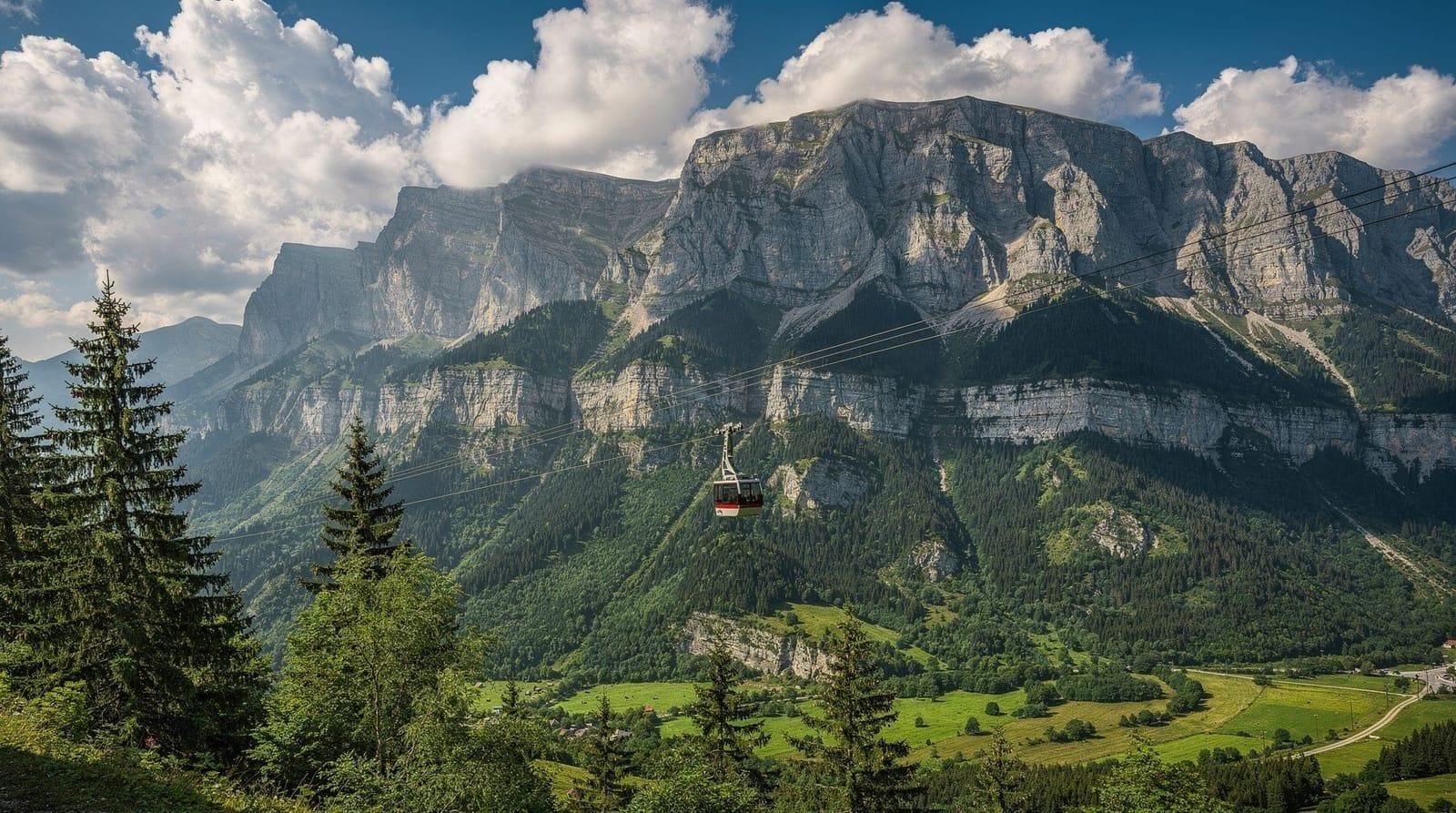
Travellers doing a longer Romania loop sometimes ask whether to pair the delta with the Carpathians in the same trip. Logistically, the two regions are on opposite sides of the country from Bucharest, so combining them within a single short visit means significant transit time. The Carpathians from Bucharest guide covers the mountain-day-trip options if you are weighing the two against each other; most visitors with under a week in Romania should pick one, not both, and the best time to visit Bucharest guide can help decide which season favours which region.
Frequently asked questions about the Danube Delta tour
Is a Danube Delta day trip from Bucharest worth it?
Marginally for most travellers. The 2-day tour is significantly more rewarding — you overnight in the delta and see the water at dawn before tourist boats arrive.
When is the best time to visit the Danube Delta?
April–June for birdwatching (pelican nesting season). September–October for cooler temperatures and no mosquitoes. July–August is busier and hotter.
What wildlife can I see in the Danube Delta?
White pelicans, pygmy cormorants, herons, egrets, glossy ibis, spoonbills, eagles. Otters and wild boar in remote areas. Over 300 bird species recorded.
How do I get to Tulcea independently?
Train from Bucharest Gara de Nord, twice daily, 3.5–4 hours, ~65–90 RON (13–18 EUR) one way.
What is the overnight delta experience like?
Guesthouses in delta villages (150–600 RON / 30–120 EUR per night), fresh fish meals, no road access, boat transport between villages. Genuinely atmospheric.
Are there 3-day birdwatching tours available?
Yes — specialist birdwatching tours of 3 days from Bucharest target pelicans and migration rarities. Cost 1,200–2,000 RON (240–400 EUR) per person.